

Leadership behaviour L9
Use the Checklist
Under pressure, memory fails and critical steps slip. A short, well-designed checklist frees your mind for judgement and makes high-stakes work reliable.
Jump to L9 resources ↓What this behaviour looks like
Memory aid, not manual
A leader turns a high-stakes process, such as keeping pupils safe on a trip or preparing for an inspection call, into a few critical steps with named owners. Colleagues use it where the work happens, and it supports judgement and improves after each use.
A practical example
Getting a school trip away safely
Relying on memory“Everyone knows what to do on trip mornings, so let's just make sure we're organised.”
Using the checklist“Before anyone boards, we run the departure checklist: registers, medication and transport all confirmed. If any line is not confirmed, we hold the coach and the visit leader decides what happens next.”
Trip morning: registers, medication and transport must all be ready.
Run the departure checklist before anyone boards the coach.
If any line is unconfirmed, the coach waits; the visit leader decides.
Draft a short checklist for a process coming up soon, agree what happens if a line cannot be confirmed and who decides, then test it on a realistic example.
L9 · Resources for your setting
Put ‘Use the Checklist’ into practice
Develop your own practice or lead the learning with your team. Use the chapter and workbook to explore the behaviour, then choose the resources that fit your next step.


Apply · Your leadership practice
Put it to work
Use the L9 Playbook to turn the behaviour into practical action on a real leadership challenge.
- Practical toolkit and coaching prompts
- A practice script to rehearse your approach
- A 90-day plan to guide your next steps
Members only · Explore membership →

Apply · Learning with your team
Lead a team session
Use the L9 INSET PowerPoint to help colleagues explore the behaviour and plan how to put it into practice.
- Editable slides to adapt to your setting
- Speaker notes to support facilitation
- Discussion, rehearsal and planning
Members only · Explore membership →
Worked examples
See L9 applied in eight leadership contexts
Choose your role to explore the challenge, the leader’s response and the intended result. Members can read the complete example and download an editable Word copy.
In a primary school
In a secondary school
Across schools
Selected worked example
In a primary school · Headteacher
Approving a residential visit
Luke · Headteacher · 690-pupil primary school
Worked example at a glance
Approving a residential visit
The challengeSafety-critical decisions about a residential visit need to come together early enough to act on, including what happens if new medication arrives on departure morning.
What the leader doesThe headteacher takes an eight-point approval checklist to the visit meeting four weeks out, leaves judgement with the visit and safeguarding leads and agrees the exact sequence for late medication.
What success looks likeBy day 30 the eight-point checklist should be tested on two applications; by day 60 every residential control should be verified before the final review; by day 90 no departure-day omission should create avoidable risk.
Nathan · Assistant Headteacher · 690-pupil primary school
Worked example at a glance
Building a role-sensitive induction
The challengeInduction varies by role and contract, and a fully signed checklist can hide the fact that a new starter has not understood what was covered.
What the leader doesThe assistant headteacher introduces an induction checklist that treats a midday supervisor and a teacher as full colleagues, separates delivered from understood and gives managers words to reteach without blame.
What success looks likeBy day 30 the induction checklist should be tested across five roles; by day 60 six starters should complete critical rehearsal and a day-ten review; by day 90 induction reliability should no longer vary materially by role.
Isaac · Science Lead and Year 5 teacher · 690-pupil primary school
Worked example at a glance
Checking readiness for science practicals
The challengeOnly 82% of equipment and allergy checks are secure before science practicals, and teachers have no agreed response when equipment fails with pupils already in the room.
What the leader doesThe science lead introduces a point-of-use readiness checklist and rehearses with colleagues what a teacher does when equipment fails: the stop, the safe alternative and who is told.
What success looks likeBy day 30 the checklist should be tested in ten lessons; by day 60 secure pre-use checks should rise from 82% to at least 95%; by day 90 they should exceed 98% with no preventable practical incident.
Neil · Headteacher · ages 11 to 16 secondary school, 990 pupils
Worked example at a glance
Checking results before publication
The challengePublished results have needed correction before, and a figure can be entirely accurate yet misleading when the comparator has changed.
What the leader doesThe headteacher introduces a publication checklist at a rehearsal before results day, adding one question about whether a true figure gives a fair impression, and tests it on a misleading headline.
What success looks likeBy day 30 the checklist should be tested against last year's corrections; by day 60 three releases should pass independent reproduction and meaning checks; by day 90 no published claim should need avoidable correction.
Dean · Assistant Headteacher · ages 11 to 16 secondary school, 990 pupils
Worked example at a glance
Deciding readiness for a managed move
The challengeEarlier managed moves have been delayed, and now transport is amber two days before a pupil is due to start, with both schools keen to proceed.
What the leader doesThe assistant headteacher uses a managed-move checklist that gives each school clear ownership, separates inconvenience from safety when a line is amber and names any temporary control if the start goes ahead.
What success looks likeBy day 30 the checklist should catch every cause of three previous delays; by day 60 two live managed moves should reach readiness on time; by day 90 no start should be delayed by unclear ownership.
Peter · Educational Visits and Enrichment Lead · ages 11 to 16 secondary school, 990 pupils
Worked example at a glance
Getting visits away on time
The challengeThree visits leave in the next fortnight, and departures need safety-critical information confirmed without avoidable delays at the coach bay.
What the leader doesThe visits lead introduces a departure checklist, gives visit leaders authority to hold a departure and rehearses a calm coach-bay announcement that identifies no child or medical detail.
What success looks likeBy day 30 the checklist should be tested on five visits; by day 60 registers, medication and transport should be ready before pupils assemble; by day 90 avoidable late departures should fall to zero.
Alex · Head of Design and Technology · ages 11 to 16 secondary school, 990 pupils
Worked example at a glance
Standardising coursework authentication
The challengeSix teachers record the authentication and storage of supervised project work in six different ways.
What the leader doesThe head of department replaces six habits with one checklist, and tells teachers what to record, what not to imply and who decides when they cannot honestly authenticate part of a pupil's work.
What success looks likeBy day 30 six teachers should use one controlled checklist consistently; by day 60 every candidate record should reconcile before submission; by day 90 the full assessment cycle should pass internal compliance review.
Colin · Trust Director of Governance and Assurance · fourteen-school trust
Worked example at a glance
Introducing a school-joining checklist
The challengeA new school transfers in within six weeks, and the trust needs every statutory and operational handover secured, with an agreed response when a critical line comes back red.
What the leader doesThe director introduces one concise joining checklist with evidence for each line, agrees who can accept a temporary arrangement when a line is red and tests the checklist before the next transfer.
What success looks likeBy day 30 one controlled joining checklist should be tested; by day 60 a live transfer should reach every critical checkpoint; by day 90 day-one failures from omitted handovers should fall to zero.
The complete Playbook is for members
Turn this example into action
Read the full toolkit, coaching and practice scripts, and 90-day plan. Members can view the PDF here and download an editable Word copy.
Resources for this behaviour
Templates and checklists from the resource library that put L9 into practice.
Further reading
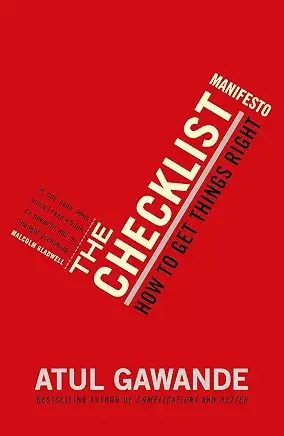
Recommended book
The Checklist Manifesto – Atul Gawande (2009)
This book helps you apply the behaviour by demonstrating how structured tools reduce error and increase consistency in complex environments.
References from the Everyone Succeeds book
- Clark, R.C. (2008) Building Expertise: Cognitive Methods for Training and Performance Improvement. 3rd edn. San Francisco: Pfeiffer. Buy on Amazon ↗
- Gawande, A. (2009) The Checklist Manifesto: How to Get Things Right. New York: Metropolitan Books. Buy on Amazon ↗
- Kahneman, D. (2011) Thinking, Fast and Slow. New York: Farrar, Straus and Giroux. Buy on Amazon ↗
Not sure where to start? Take the free self-diagnostic to choose one to three behaviours to focus on.
As an Amazon Associate, Everyone Succeeds earns from qualifying purchases.