How it works
The Everyone Succeeds Leadership Framework
54 observable leadership behaviours that transform schools.
School leadership is one of the most powerful influences on the success of students. Research consistently shows that strong leadership improves teaching quality, strengthens school culture, and raises outcomes for children and young people.
Yet many leaders still face a practical question:
“What should I actually do differently tomorrow?“
Much of the leadership literature describes important ideas such as building trust, setting a vision, or developing people. While valuable, these ideas are often described at a high level and are difficult to translate into daily practice.
The Everyone Succeeds Leadership Framework bridges this gap between research and daily leadership practice.
It identifies and codifies 54 specific behaviours that effective leaders demonstrate in their daily work.
These behaviours can be:
- observed in practice
- clearly described and named
- deliberately practised and refined
- coached and developed over time
By focusing on behaviours rather than abstract traits, leadership becomes more practical, learnable and scalable.
The framework does not sit in isolation. It is supported by a set of practical tools and resources that help leaders apply and embed these behaviours in their daily work.
Why leadership is important
Leadership research has consistently shown that leadership has a measurable influence on student outcomes.
Waters, Marzano and McNulty (2003) identified a clear relationship between leadership and improved student achievement, while Leithwood and colleagues concluded that leadership is second only to classroom instruction among school-related factors influencing learning.
However, researchers have also identified a challenge.
Hallinger and Heck (1996) described leadership as a “black box” problem: we know leadership has an impact, but it is often difficult to see exactly what effective leaders do.
The Everyone Succeeds framework addresses this challenge by identifying the behaviours that make leadership effective and organising them into a clear structure that leaders can use to develop their practice.
Learn more about codifying leadership behaviours →
The 54 leadership behaviours
The Everyone Succeeds Leadership Framework organises leadership into 54 behaviours drawn from observing effective school leaders and examining the strongest research in organisational and educational leadership.
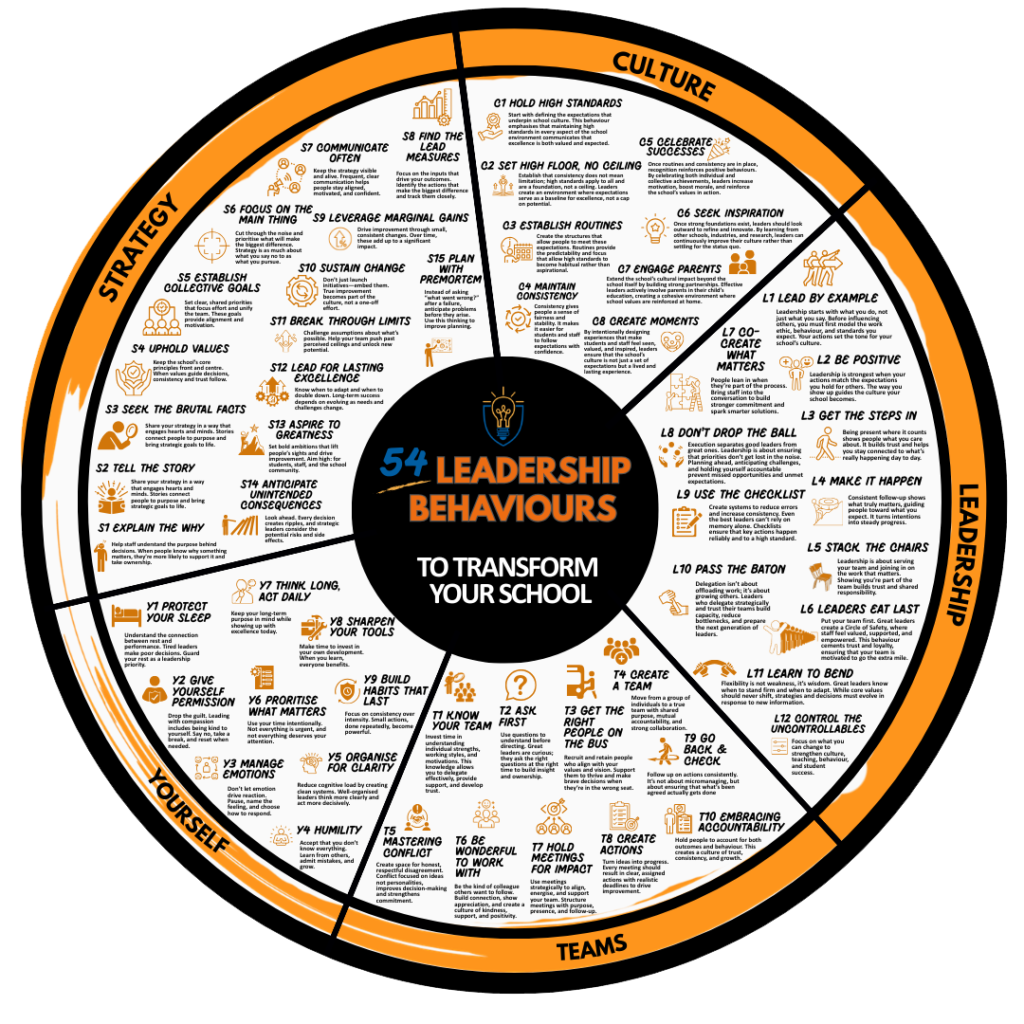
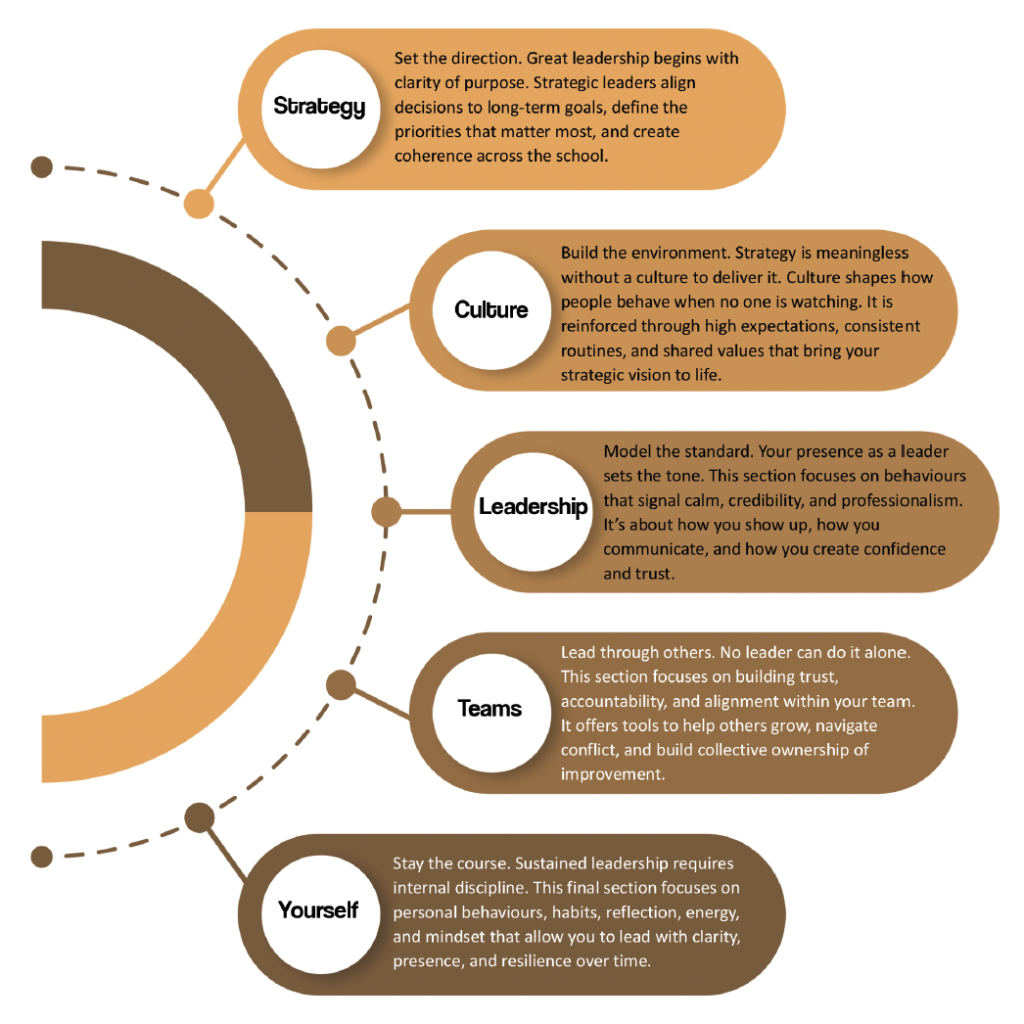
These behaviours are grouped into five domains:
- Strategy – Clarifying direction and aligning actions with the school’s most important priorities.
- Culture – Building the norms, expectations and relationships that shape how people work together.
- Leadership – Influencing, guiding and supporting others to perform at their best.
- Teams – Developing people, strengthening collaboration and enabling collective success.
- Yourself – Managing the habits, discipline and mindset that sustain effective leadership.
Together, these behaviours provide a practical map of what effective leadership looks like in action. They create a shared language for discussing practice and a clear structure for developing leadership over time.
From framework to practice
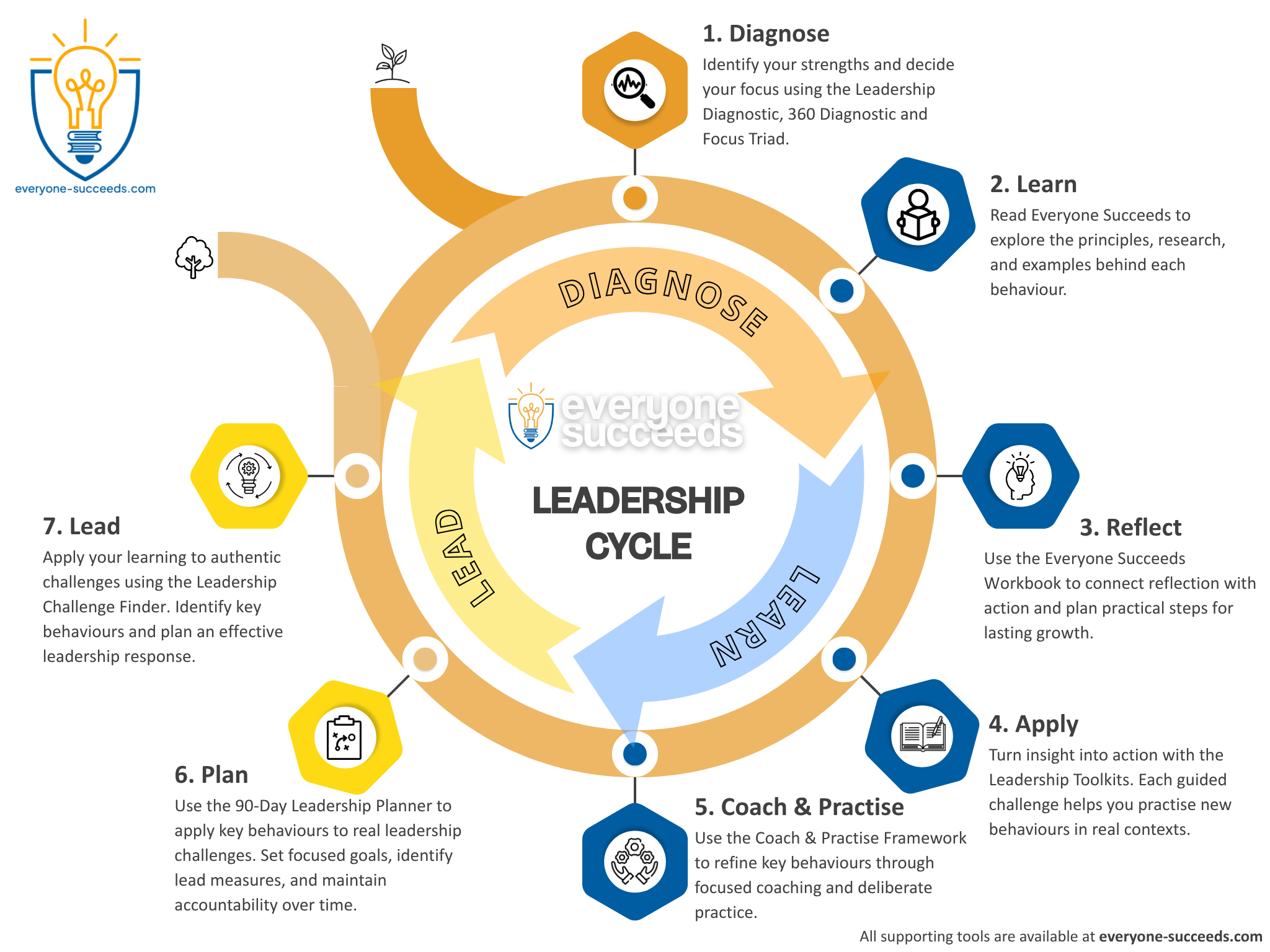
Understanding leadership behaviours is only the starting point. The Everyone Succeeds Leadership Cycle provides a structured way to develop and apply these behaviours in practice, helping leaders move from insight to consistent action.