

Teams behaviour T8
Create Actions
Without clear actions, even inspiring plans stay words on a page. End every meeting with what will be done, by whom and by when.
Jump to T8 resources ↓What this behaviour looks like
From intent to implementation
A leader closes each discussion with a few specific actions: what will be done, one named owner, a realistic deadline and what finished looks like. Whether the work involves colleagues, pupils or families, nobody leaves asking who was supposed to do that.
A practical example
Closing a meeting about reading at home
A vague intention“So we all agree we need to improve reading at home. Let's think about it and come back to it next half term.”
A clear action“Our Year 3 lead has agreed to coordinate sending the reading record and family guide by Friday. Our English lead will check returns in two classes next week and bring the evidence to Tuesday's meeting, so we know families have what they need.”
Send the reading record and family guide home by Friday.
Year 3 lead coordinates sending; English lead checks returns.
The English lead brings evidence of returns to Tuesday's meeting.
Take one broad intention and rewrite it as an action: what will be done, who has agreed to do it, by when, and what will show it is finished.
T8 · Resources for your setting
Put ‘Create Actions’ into practice
Develop your own practice or lead the learning with your team. Use the chapter and workbook to explore the behaviour, then choose the resources that fit your next step.


Apply · Your leadership practice
Put it to work
Use the T8 Playbook to turn the behaviour into practical action on a real leadership challenge.
- Practical toolkit and coaching prompts
- A practice script to rehearse your approach
- A 90-day plan to guide your next steps
Members only · Explore membership →

Apply · Learning with your team
Lead a team session
Use the T8 INSET PowerPoint to help colleagues explore the behaviour and plan how to put it into practice.
- Editable slides to adapt to your setting
- Speaker notes to support facilitation
- Discussion, rehearsal and planning
Members only · Explore membership →
Completed Playbooks
See T8 applied in eight leadership contexts
Choose your role to explore the challenge, the leader’s response and the intended result. Members can read the complete example and download an editable Word copy.
In a primary school
In a secondary school
Across schools
Selected completed example
In a primary school · Headteacher
Turning a vague lunchtime plan into actions
Duncan · Headteacher · 392-pupil primary school
Worked example at a glance
Turning a vague lunchtime plan into actions
The challengeLunchtime incidents have risen to 30 in six weeks and only 46% of sampled pupils join purposeful activity. The draft action, 'create more playground activities', names no barrier, owner or finish line.
What the leader doesThe headteacher agrees three sequenced actions: pupil walks to map hotspots by Friday, then a staffed activity zone and a quiet option piloted with named owners, including someone responsible for equipment reset.
What success looks likeBy day 30 the ten-day pilot should reach active, peripheral and quieter pupils; by day 60 incidents should fall by at least 40% and purposeful participation should reach 70%; by day 90 the model should run without extra staffing burden.
Lisa · Assistant Headteacher for assessment · 648-pupil junior school
Worked example at a glance
Cutting report-writing time without losing value
The challengeTeachers spend about six hours per class on annual reports, repeating information families already have. The draft action, 'I will produce a shorter template', makes the assistant head the bottleneck.
What the leader doesThe assistant head agrees three owned actions: a field audit by Friday, timed prototype reports from two teachers and a check of family understanding, making clear that saving time cannot mean telling families less.
What success looks likeBy day 30 the field audit and six timed prototypes should be complete; by day 60 reports should take four hours or less and 85% of families should identify the key messages; by day 90 the new format should be ready.
Grace · Mathematics Lead and Year 1 teacher · 238-pupil infant school
Worked example at a glance
Making a maths routine happen in every class
The challengeEvery class passed an audit of manipulatives, but only 39% of sampled pupils could explain how the representation linked to the written method. The new routine is still only an intention.
What the leader doesThe maths lead produces two annotated worked examples by Friday, then asks each year-group lead to choose a first use that fits their class, stated as date, owner, action and evidence, with an honest capacity check.
What success looks likeBy day 30 every year group should complete its first use and refine the routine once; by day 60 every class should use it and 75% of sampled pupils should connect representation to recording; by day 90 teachers should adapt manipulatives confidently.
Colm · Headteacher · 1,260-pupil secondary school
Worked example at a glance
Coordinating Year 11 guided study
The challengeAttendance at Year 11 guided study averages 54%, some pupils get three invitations in one evening and sessions are advertised simply as revision. Draft minutes hand the work to 'faculties and pastoral'.
What the leader doesThe headteacher agrees a pupil-level map of need and clashes by Friday, four-session faculty strands each with a precise purpose, and one named person who resolves competing invitations for each pupil.
What success looks likeBy day 30 every priority pupil should have one reconciled plan; by day 60 attendance among invited pupils should reach 75%, with no group below 65%; by day 90 targeted gaps should improve and low-value sessions should stop.
Ed · Deputy Headteacher for professional development · 1,180-pupil secondary school
Worked example at a glance
Turning good training into classroom action
The challengeStaff rate professional development highly, yet only 37% can name a supported classroom action two weeks later. The draft minutes say 'faculty leads to improve implementation', with nothing specific assigned.
What the leader doesThe deputy head takes the first action personally, rewriting the next programme backwards from one classroom action, then asks two development leads to test it with their teams and return the same four pieces of evidence.
What success looks likeBy day 30 the next programme should include the full model-to-follow-up sequence and two trials; by day 60 every programme should name a classroom action and follow-up; by day 90 80% of sampled actions should be secure.
Natalie · Alternative Provision and Reintegration Lead · 1,450-pupil secondary school
Worked example at a glance
Owning each step of a pupil's return
The challengeOnly 62% of reintegration plans are complete before return because actions go to 'pastoral, SEND and curriculum'. The proposed date leaves two school days, with the timetable and trusted adult unconfirmed.
What the leader doesThe lead keeps accountability for the whole plan, sets a pupil-and-family conversation five days before return and acknowledged handovers from named specialists three days before, and proposes a date that meets the standard.
What success looks likeBy day 30 every return should have a co-produced plan five school days ahead and handovers acknowledged three school days before; by day 60 every pupil should get day-one and day-five reviews; by day 90 attendance and participation should improve.
Keziah · Head of Business and Economics · 1,520-pupil secondary school
Worked example at a glance
Sharpening retrieval in exam classes
The challengeRetrieval is frequent, but most questions test isolated definitions rather than application to unfamiliar contexts. The draft action, 'everyone to create more exam-style starters', duplicates work and leaves quality undefined.
What the leader doesThe head of department writes and teaches one annotated model set by Friday, gives each course lead one sequence with a partner review date, and agrees who acts when the evidence exposes a gap.
What success looks likeBy day 30 the model and first paired sets should be peer-reviewed and taught; by day 60 every exam class should use two balanced weekly sets; by day 90 recurring application gaps should reduce without extra duplicate planning.
Irene · Trust Director of People and Culture · nine-school trust
Worked example at a glance
Making induction actions owned
The challengeLeaders agreed induction must improve, but the action says only that 'HR and schools' will develop a programme. Three recent starters received safeguarding information after day one, and five schools use different starting points.
What the leader doesThe director turns the agreement into dated actions with single owners: a one-page induction entitlement, then a live test of the handover using real starters, inviting ownership rather than imposing it.
What success looks likeBy day 30 the entitlement and handover should be tested, with no starter lacking safeguarding access after day one; by day 60 all nine schools should have named induction leads; by day 90 at least 90% of starters should report clarity and support.
The complete Playbook is for members
Turn this example into action
Read the full toolkit, coaching and practice scripts, and 90-day plan. Members can view the PDF here and download an editable Word copy.
Resources for this behaviour
Templates and checklists from the resource library that put T8 into practice.
Further reading
Recommended book
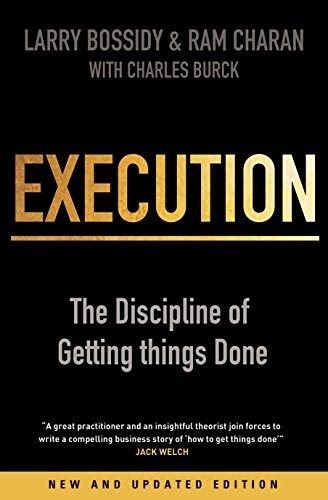
Execution: The Discipline of Getting Things Done – Larry Bossidy & Ram Charan (2002)
This text strengthens the behaviour by explaining how to turn conversations into clear, owned next steps that move work forward.
References from the Everyone Succeeds book
- McChesney, C., Covey, S. and Huling, J. (2012) The 4 Disciplines of Execution: Achieving Your Wildly Important Goals. New York: Free Press. Buy on Amazon ↗
- Carter, D. and McInerney, L. (2020) Leading Academy Trusts: Why Some Fail, But Most Don't. Woodbridge: John Catt Educational. Buy on Amazon ↗
- Collins, J. (2009) How the Mighty Fall: And Why Some Companies Never Give In. London: Random House Business Books. Buy on Amazon ↗
- Steel, P. (2007) 'The nature of procrastination: A meta-analytic and theoretical review of quintessential self-regulatory failure', Psychological Bulletin, 133(1), pp. 65–94. Read free ↗
Not sure where to start? Take the free leadership diagnostic to find your three priorities.
As an Amazon Associate, Everyone Succeeds earns from qualifying purchases.