

Strategy behaviour S10
Sustain Change
Launching change is the easy part. Test it small, address people's sense of loss and anchor it in daily routines so it lasts.
Jump to S10 resources ↓What this behaviour looks like
Bullets, then cannonballs
A leader pilots a change on a small scale, then gives staff repeated, supported experience of it so familiarity replaces resistance. It is built into routines and induction and owned by colleagues, so pupils and families experience it consistently even after people move on.
A practical example
Keeping a new feedback routine going
Launch and hope“The new feedback routine went well in September, so we'll assume it's still happening.”
Built to last“The new feedback routine worked in our Year 7 pilot, so it is now in our planning template and induction, and each head of department owns it, checking every half term what is fading. That way pupils keep getting good feedback when staff change or pressure builds.”
Prove the feedback routine in a Year 7 pilot first.
Add it to planning and induction; heads of department own it.
Heads of department ask each half term what is fading.
Pick one change that worked. Name who will own it when your attention moves on, where it will live in normal routines, and when you will check what is fading.
S10 · Resources for your setting
Put ‘Sustain Change’ into practice
Develop your own practice or lead the learning with your team. Use the chapter and workbook to explore the behaviour, then choose the resources that fit your next step.


Apply · Your leadership practice
Put it to work
Use the S10 Playbook to turn the behaviour into practical action on a real leadership challenge.
- Practical toolkit and coaching prompts
- A practice script to rehearse your approach
- A 90-day plan to guide your next steps
Members only · Explore membership →

Apply · Learning with your team
Lead a team session
Use the S10 INSET PowerPoint to help colleagues explore the behaviour and plan how to put it into practice.
- Editable slides to adapt to your setting
- Speaker notes to support facilitation
- Discussion, rehearsal and planning
Members only · Explore membership →
Completed Playbooks
See S10 applied in eight leadership contexts
Choose your role to explore the challenge, the leader’s response and the intended result. Members can read the complete example and download an editable Word copy.
In a primary school
In a secondary school
Across schools
Selected completed example
In a primary school · Headteacher
Lunchtime calm on cover days
Mary · Headteacher · 325-pupil primary school
Worked example at a glance
Lunchtime calm on cover days
The challengeA new lunchtime routine cut incidents from 29 to 12 a fortnight, but it slips when regular supervisors are away, and pupils who find unstructured time hardest feel it first.
What the leader doesThe headteacher tests a five-minute briefing, zone map and worked reset with planned cover staff for one week, fixes the essential safety moves and invites supervisors to improve positioning and language.
What success looks likeBy day 30 a planned-cover week should complete safely; by day 60 the guide, rehearsal and ownership should be routine; by day 90 incidents should stay below 14 a fortnight, including cover weeks.
Joseph · Deputy Headteacher for teaching and professional development · 460-pupil two-form-entry primary school
Worked example at a glance
Coaching that survives busy weeks
The challengeCoaching participation is 92%, but two teams cancel in assessment weeks and elsewhere sessions drift into discussing practice rather than rehearsing it.
What the leader doesThe deputy headteacher tests a fifteen-minute assessment-week format with two teams: focus, word-for-word rehearsal, one feedback point and a revised attempt, replacing lower-value activity rather than adding to it.
What success looks likeBy day 30 two teams should complete three protected cycles; by day 60 coaches should deliver both formats reliably; by day 90 participation should hold at 90% or above, with every team completing a revised attempt.
Tomoko · Geography Lead and Year 6 teacher · 300-pupil junior school
Worked example at a glance
Fieldwork that outlasts one teacher
The challengeEvery class ran stronger local fieldwork this year, but the enquiry planning, risk knowledge and community contacts sit mainly with the Geography lead.
What the leader doesThe Geography lead gives Year 4 and Year 6 a shared planning pack, coaches one planning meeting, then steps back while each team runs its own local enquiry and reviews workload and pupil evidence.
What success looks likeBy day 30 two teams should independently plan safe, inclusive enquiries; by day 60 both enquiries should produce useful pupil and partner evidence; by day 90 every Key Stage 2 class should have a local enquiry owned by its own team.
Dermot · Headteacher · ages 11 to 18 secondary school, 1,505 pupils
Worked example at a glance
Disciplinary reading in every faculty
The challengeThe reading routine appears in 76% of sampled lessons, but faculty use ranges from 48% to 94%, so a pupil's timetable decides how much of it they get.
What the leader doesThe headteacher asks Science and Art to test their own subject versions of four shared reading principles for four weeks, including in a cover-taught class, and removes the separate routine tracker.
What success looks likeBy day 30 Science and Art should complete contrasting pilots; by day 60 proven subject models should spread with targeted coaching; by day 90 every faculty should reach at least 85% of sampled lessons.
Katherine · Assistant Headteacher for SEND and adaptive teaching · ages 11 to 16 secondary school, 1,330 pupils
Worked example at a glance
Adaptive teaching in cover lessons
The challengeAdaptive-planning prompts appear in 72% of sampled lessons, but less often in classes taught by cover or new staff, where pupils who most need adaptation are least likely to get it.
What the leader doesThe assistant headteacher builds three prompts into existing planning in two faculties, including cover classes and new staff, removes the separate form and gives cover staff the essential pupil information.
What success looks likeBy day 30 two faculties should complete a four-week pilot; by day 60 the proven prompts should be embedded in planning and cover; by day 90 at least 90% of sampled lessons should show a useful barrier, adaptation and check.
Imogen · Head of Sixth Form · ages 11 to 18 secondary school, 1,280 pupils
Worked example at a glance
Study habits after mocks
The challengeA study routine raised on-time independent work from 61% to 79%, but it falls sharply after mock examinations, especially for the students furthest behind.
What the leader doesThe head of sixth form co-designs a post-mock version with two tutor groups: one weekly plan, a five-minute coaching conversation and student-chosen evidence of completion, with no public dashboard.
What success looks likeBy day 30 two tutor groups should complete a three-week co-designed pilot; by day 60 the useful routine should be embedded with targeted access; by day 90 on-time work should be at least 80% in the weeks after mocks.
Farida · Head of Food Preparation and Nutrition · ages 11 to 16 secondary school, 965 pupils
Worked example at a glance
A safe recovery routine for practicals
The challengeA revised practical routine cut set-up time and minor incidents, but secure use ranges from 58% to 92% between classes, with the widest gaps when lessons start late or equipment fails.
What the leader doesThe head of department fixes the hygiene, allergen and equipment checks, then tests a five-minute recovery decision with Year 9: proceed, simplify, demonstrate and analyse, or stop.
What success looks likeBy day 30 Year 9 should complete a three-week recovery pilot; by day 60 the routine and recovery model should be embedded across classes; by day 90 secure use should reach 90% of practical lessons.
Henry · Trust Director of Digital Strategy · nine-school trust
Worked example at a glance
Consistent safeguarding records
The challengeAll nine schools use the safeguarding-recording system, but timely recording ranges from 71% to 97% and two schools still keep local logs alongside it.
What the leader doesThe director pilots a streamlined workflow for four weeks in two contrasting schools, removes the duplicate local log, adds a worked model and a live DSL fallback, and extends it only if both schools improve.
What success looks likeBy day 30 two schools should complete a safe four-week pilot; by day 60 the proven workflow should extend with support; by day 90 every school should record 95% of concerns on time, with a second term needed to meet the two-term standard.
The complete Playbook is for members
Turn this example into action
Read the full toolkit, coaching and practice scripts, and 90-day plan. Members can view the PDF here and download an editable Word copy.
Further reading
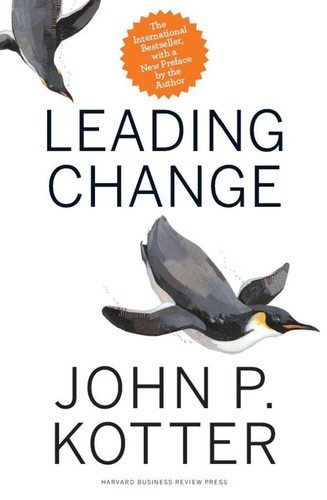
Recommended book
Leading Change – John Kotter (1996)
This book helps you apply the behaviour by breaking down the steps required to embed change so it lasts, offering a clear structure for leading improvement.
References from the Everyone Succeeds book
- Heath, C. and Heath, D. (2007) Made to Stick: Why Some Ideas Survive and Others Die. New York: Random House. Buy on Amazon ↗
- Buck, A. (2018) Leadership Matters 3.0: How Leaders at All Levels Can Create Great Schools. Woodbridge: John Catt Educational. Buy on Amazon ↗
- Collins, J. and Hansen, M.T. (2011) Great by Choice: Uncertainty, Chaos and Luck – Why Some Thrive Despite Them All. London: Random House Business. Buy on Amazon ↗
- Dweck, C.S. (2006) Mindset: The New Psychology of Success. New York: Random House. Buy on Amazon ↗
- Kahneman, D. and Tversky, A. (1979) 'Prospect theory: An analysis of decision under risk', Econometrica, 47(2), pp. 263–291. View article ↗
- Knoster, T.P., Villa, R.A. and Thousand, J.S. (2000) 'A framework for thinking about systems change', in Villa, R.A. and Thousand, J.S. (eds) Restructuring for Caring and Effective Education: Piecing the Puzzle Together. 2nd edn. Baltimore: Paul H. Brookes. Buy on Amazon ↗
- Kotter, J.P. (2012) Leading Change. Boston, MA: Harvard Business Review Press. Buy on Amazon ↗
- Zajonc, R.B. (1968) 'Attitudinal effects of mere exposure', Journal of Personality and Social Psychology, 9(2, Pt. 2), pp. 1–27. View article ↗
Not sure where to start? Take the free leadership diagnostic to find your three priorities.
As an Amazon Associate, Everyone Succeeds earns from qualifying purchases.