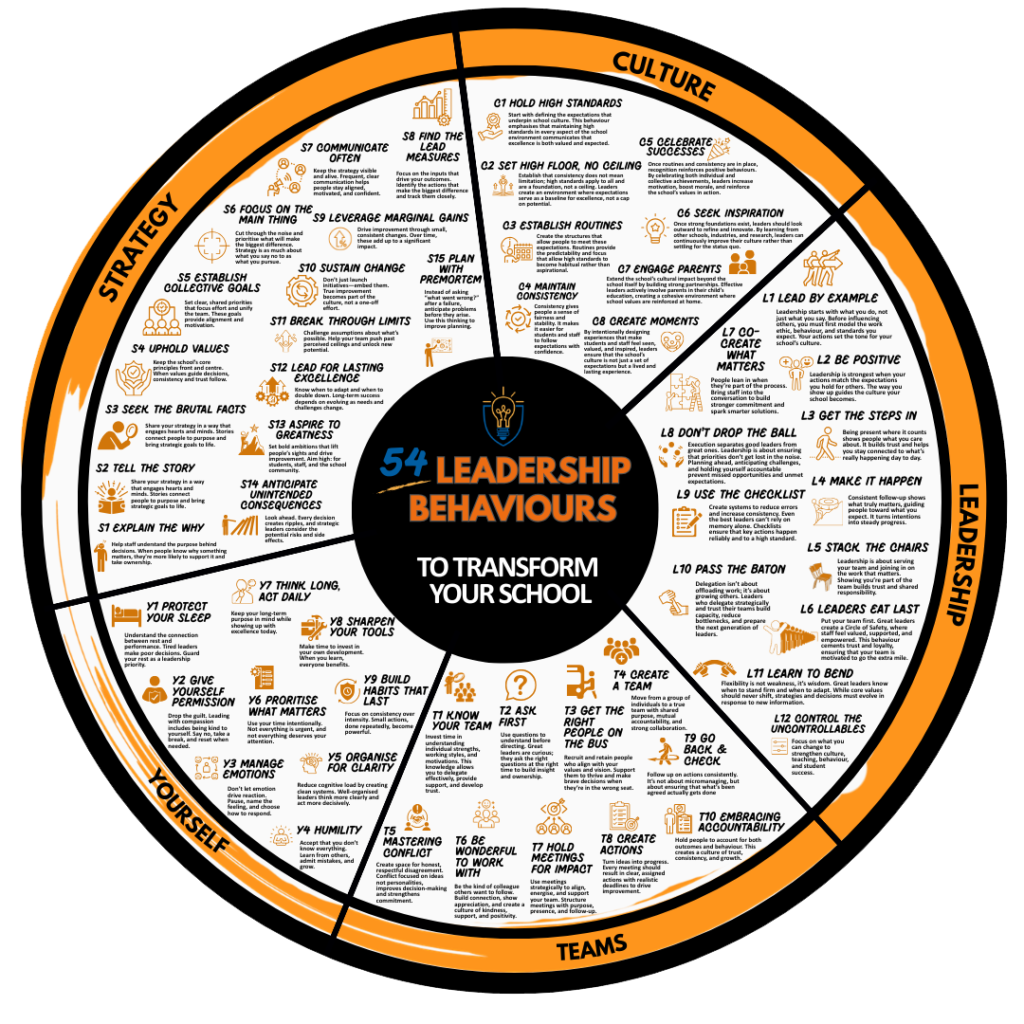
54 leadership behaviours that describe what effective school leaders do in practice.
These behaviours describe what effective leadership looks like in day-to-day practice. They have been identified and codified through observing high-performing school leaders and drawing on the strongest research in organisational and educational leadership.
Each behaviour focuses on something leaders do, say, or prioritise. Rather than describing leadership as traits or personality, the framework identifies the specific actions that help leaders build strong schools. Together, the 54 behaviours provide a practical map that leaders can explore, practise, and refine over time.
Select a behaviour below to explore how it works, why it matters, and how to develop it deliberately in your leadership practice.
Use the links below to jump to resources for each leadership domain:
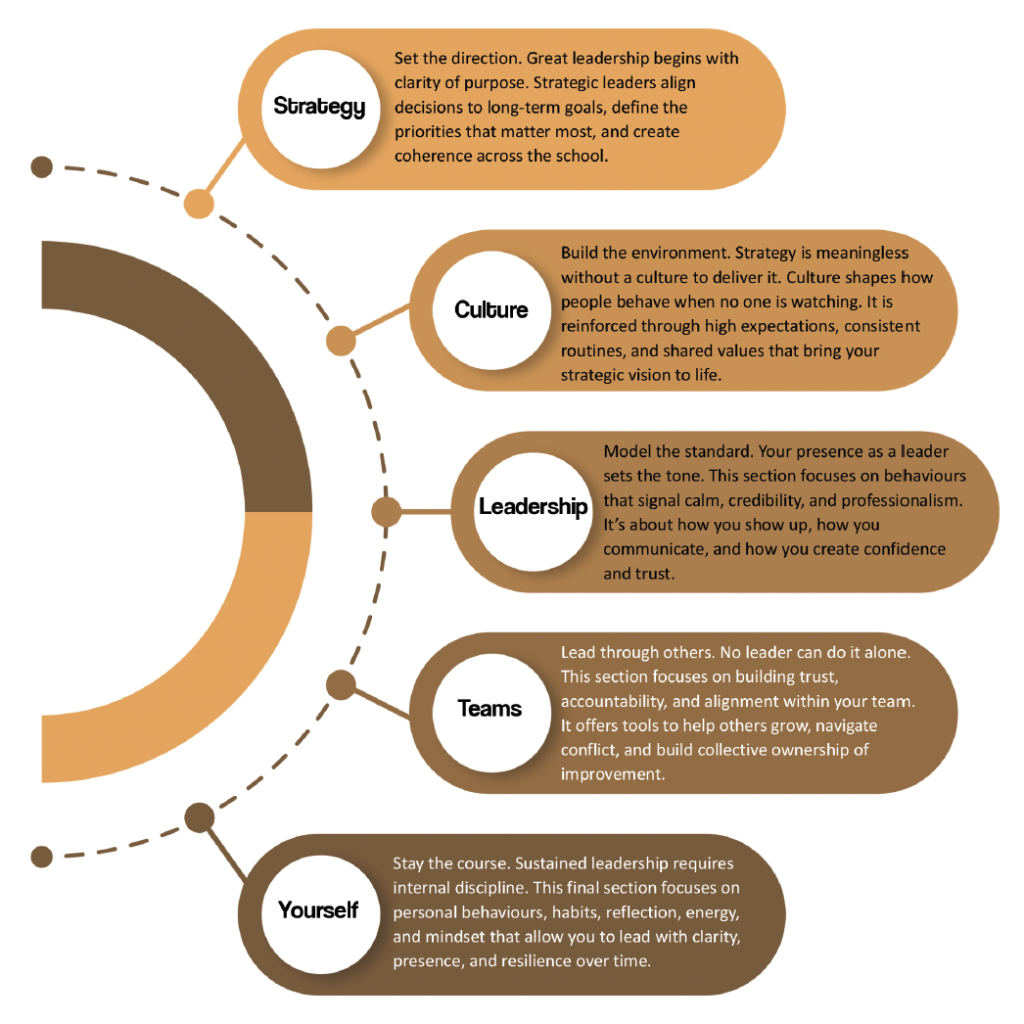
The 54 leadership behaviours are organised into five domains that reflect the main areas of leadership work in schools.
These domains are not steps or stages. Effective leaders move across them constantly as they set direction, shape culture, influence others, develop teams and sustain their own leadership over time.
Each domain groups together behaviours that serve a similar purpose:
Strategy – focuses on setting direction and aligning actions with the school’s most important priorities.
Culture – focuses on building shared expectations, trust and the conditions that allow people to do their best work.
Leadership – focuses on influencing and guiding others so that individuals and teams perform at their best.
Teams – focuses on developing people, strengthening collaboration and building collective capability.
Yourself – focuses on the habits, discipline and mindset that sustain effective leadership over time.
Together, the five domains provide a clear structure for understanding how leadership behaviours interact in practice.