

C2. Set high floor, no ceiling
Ensure strong expectations for everyone while encouraging excellence. This creates both equity and ambition.

Resources to support growth in this behaviour

Whether this behaviour has been chosen through Step 1. Diagnose, highlighted through reflection or coaching, or identified as a school or trust priority, you can now follow the steps below to develop and embed it in your daily leadership practice.

Step 2. Learn: Read Everyone Succeeds: 54 Leadership Behaviours to Transform Your School to understand what great leadership looks like in practice. Each behaviour is grounded in research and real examples from schools and businesses.

Step 3. Reflect: Use the Everyone Succeeds Workbook to apply ideas to your own context.
Guided reflection, practical actions, and space for planning turn understanding into improvement.
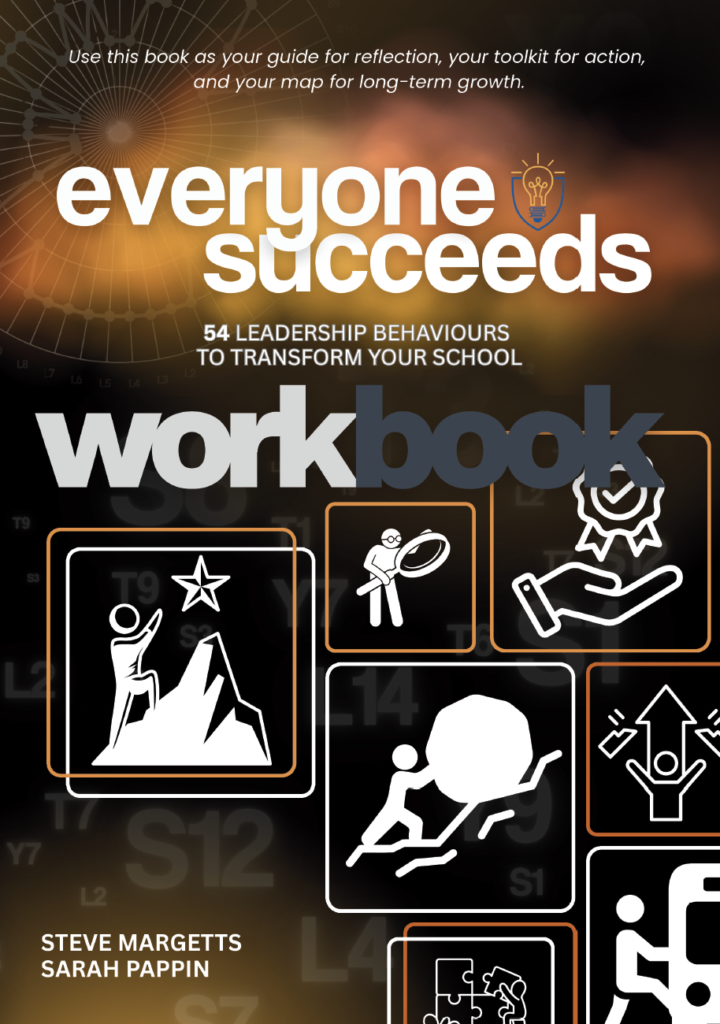

Step 4. Apply: Work through the Leadership Toolkit for this behaviour. Use the High Floor, No Ceiling toolkit to define consistent baseline expectations and design stretch opportunities so excellence is accessible to all.

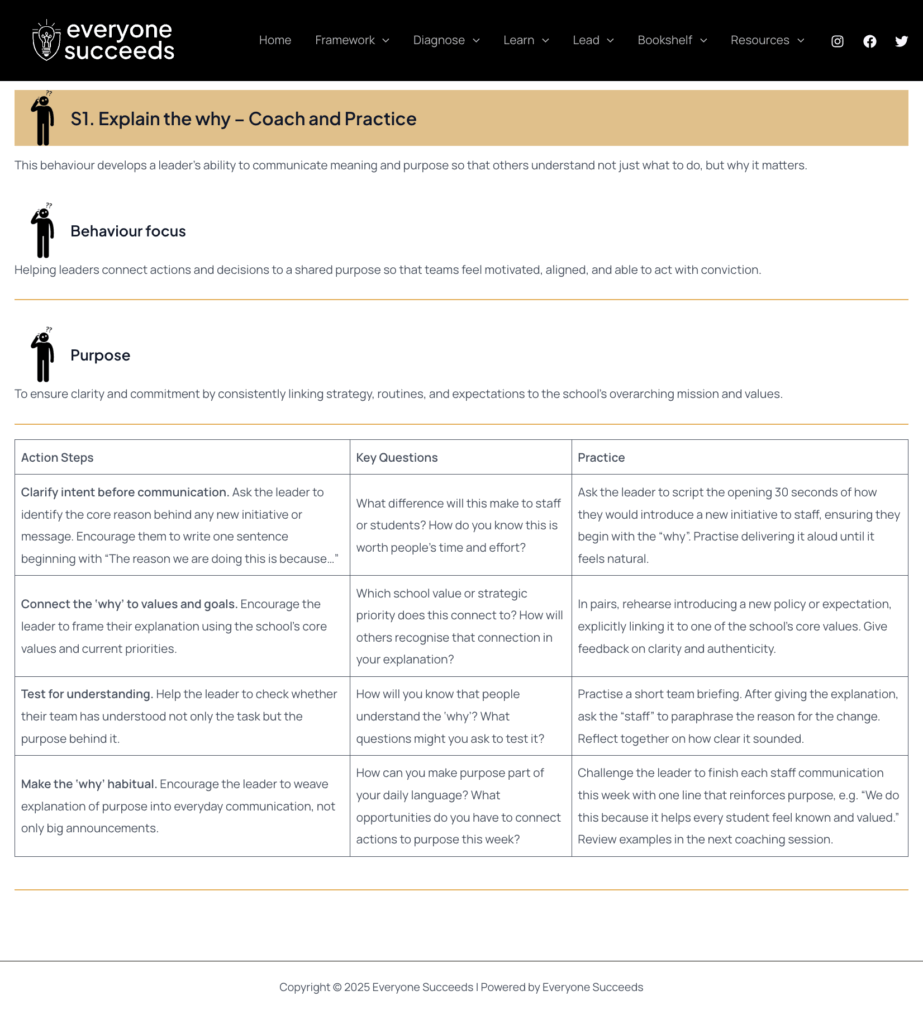
Step 5. Coach and practice: Use the Set high floor, no ceiling Coach and Practise Frameworks to strengthen the behaviour through coaching questions about minimum expectations and stretch, rehearsing the balance of support and challenge so everyone can succeed and excel.
These can be used individually or with colleagues to embed key behaviours.

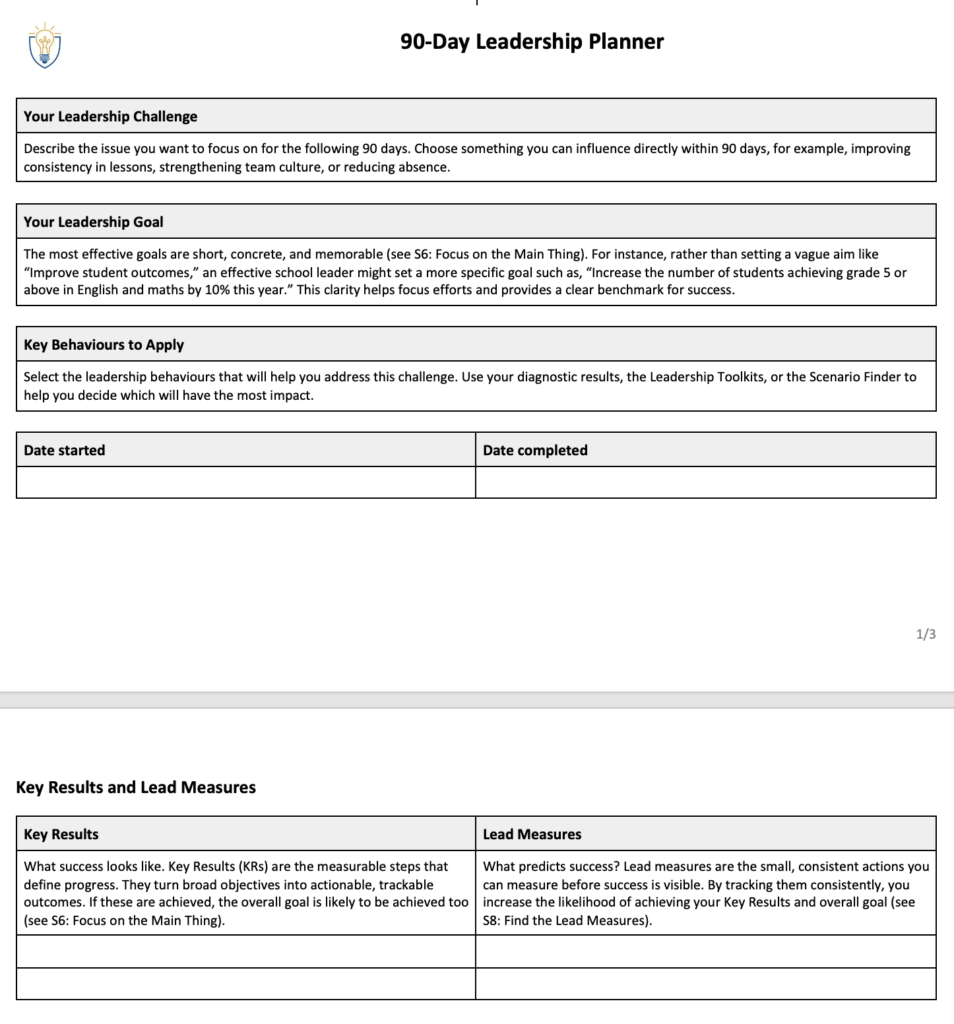
Step 6. Plan: Set measurable goals using the 90 Day Leadership Planner.
Turn improvement into action by tracking your focus and progress over time, with completed examples for different career stages.

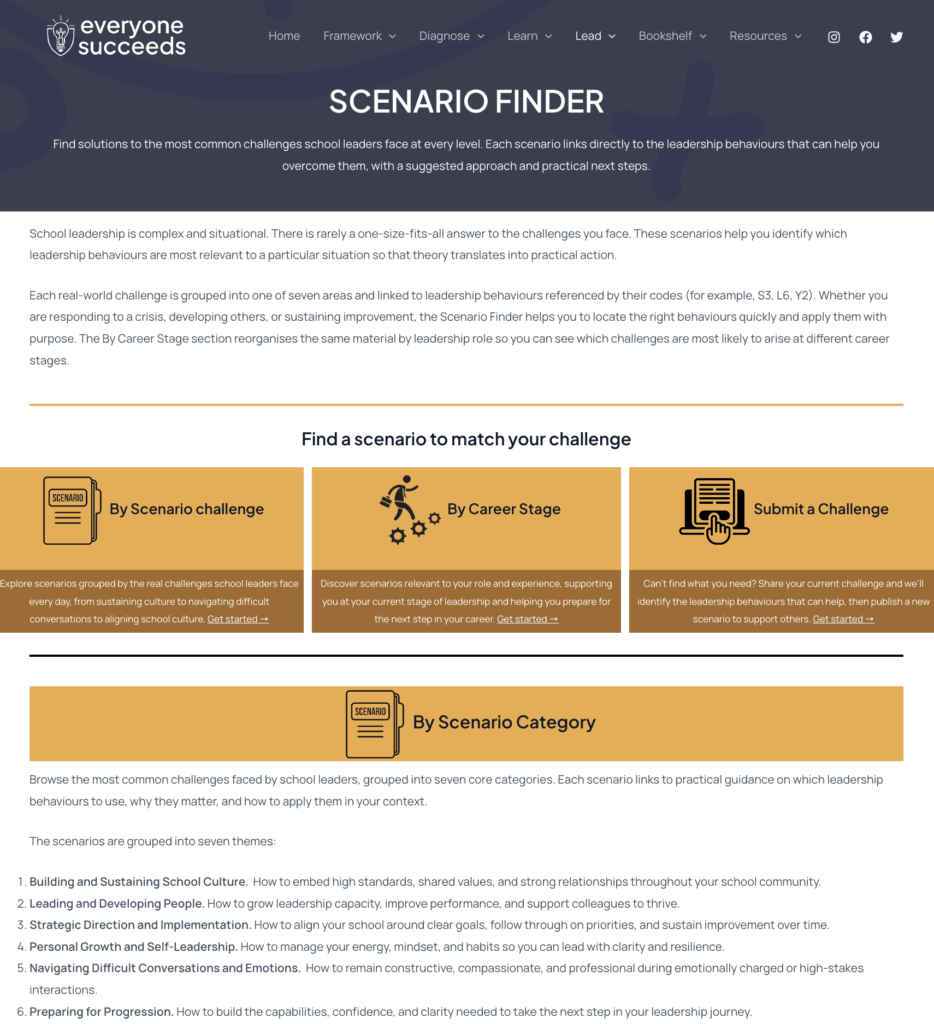
Step 7. Lead: Apply your learning to real situations through the Scenario Finder.
Over fifty scenarios link directly to the behaviours that help you solve the challenges that matter most in your school.
One book suggestion
The Talent Code by Daniel Coyle (2009).
This text deepens your practice by demonstrating how stretch, high expectations and focused coaching unlock potential across a school. Buy the book.
References from the Everyone Succeeds book
Catmull, E. and Wallace, A. (2020). Creativity, Inc.: overcoming the unseen forces that stand in the way of true inspiration. Toronto: Vintage Canada.
Coyle, D., (2021). The Talent Code: Greatness Isn’t Born It’s Grown. Random House Business Books.
Porter, A.C., Murphy, J., Goldring, E., Elliott, S.N., Polikoff, M.S., and May, H. (2008). Vanderbilt Assessment of Leadership in Education: Technical Manual, Version 1.0. Vanderbilt University, p. 13.
Rosenthal, R. and Jacobson, L., (1968). Pygmalion in the Classroom. Rinehart and Winston.