

S14. Anticipate unintended consequences
Think ahead before acting. Considering second order effects reduces risk and improves decision making.

Resources to support growth in this behaviour
Whether this behaviour has been chosen through Step 1. Diagnose, highlighted through reflection or coaching, or identified as a school or trust priority, you can now follow the steps below to develop and embed it in your daily leadership practice.

Step 2. Learn: Read Everyone Succeeds: 54 Leadership Behaviours to Transform Your School to understand what great leadership looks like in practice. Each behaviour is grounded in research and real examples from schools and businesses.

Step 3. Reflect: Use the Everyone Succeeds Workbook to apply ideas to your own context.
Guided reflection, practical actions, and space for planning turn understanding into improvement.

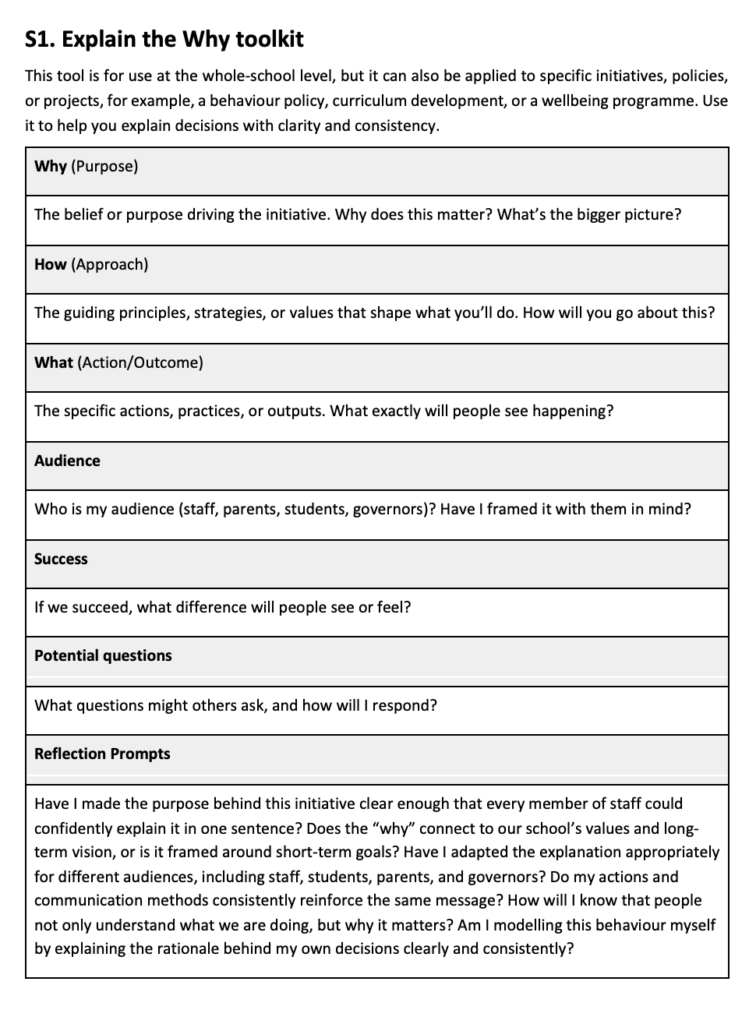
Step 4. Apply: Work through the Leadership Toolkit for this behaviour. Use the Anticipate Unintended Consequences toolkit to map first-, second-, and third-order effects so decisions land well and avoid predictable pitfalls.
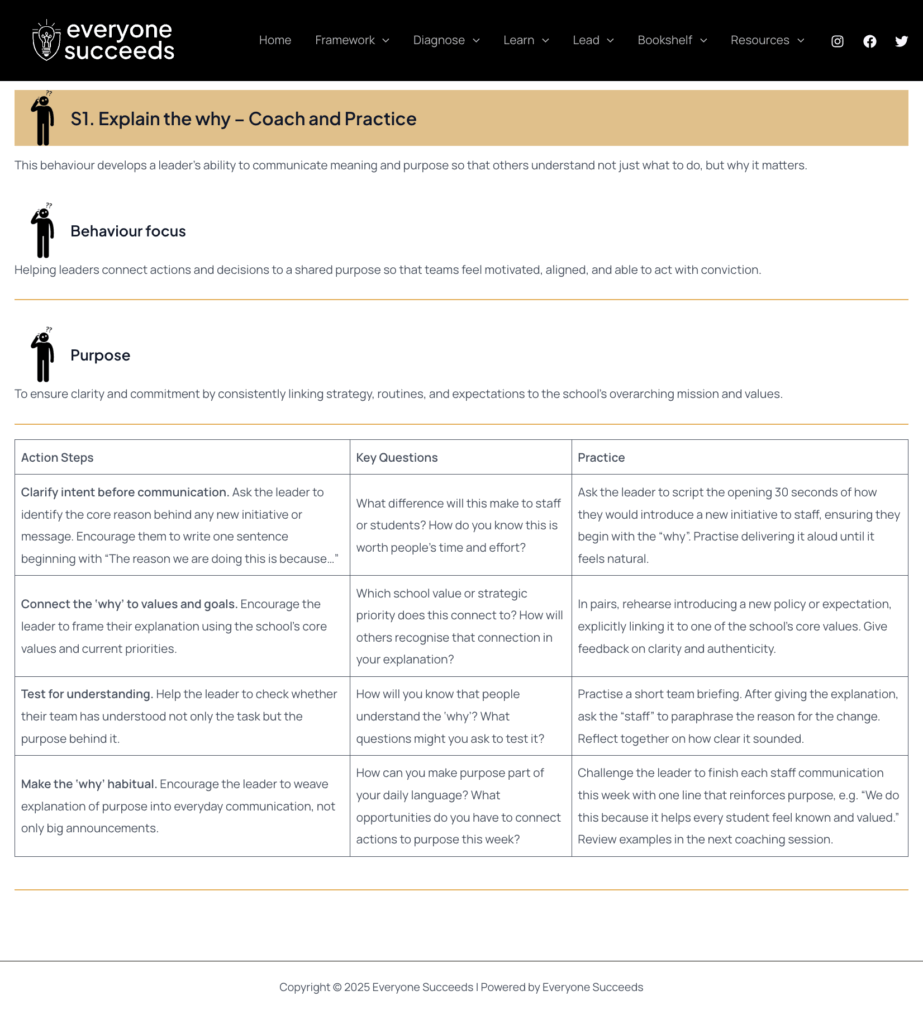
Step 5. Coach and practice: Use the Anticipate unintended consequences Coach and Practise Frameworks to strengthen the behaviour through structured questioning and pre-mortem reflection, practising thinking ahead so second-order effects are considered before action is taken.
These can be used individually or with colleagues to embed key behaviours.

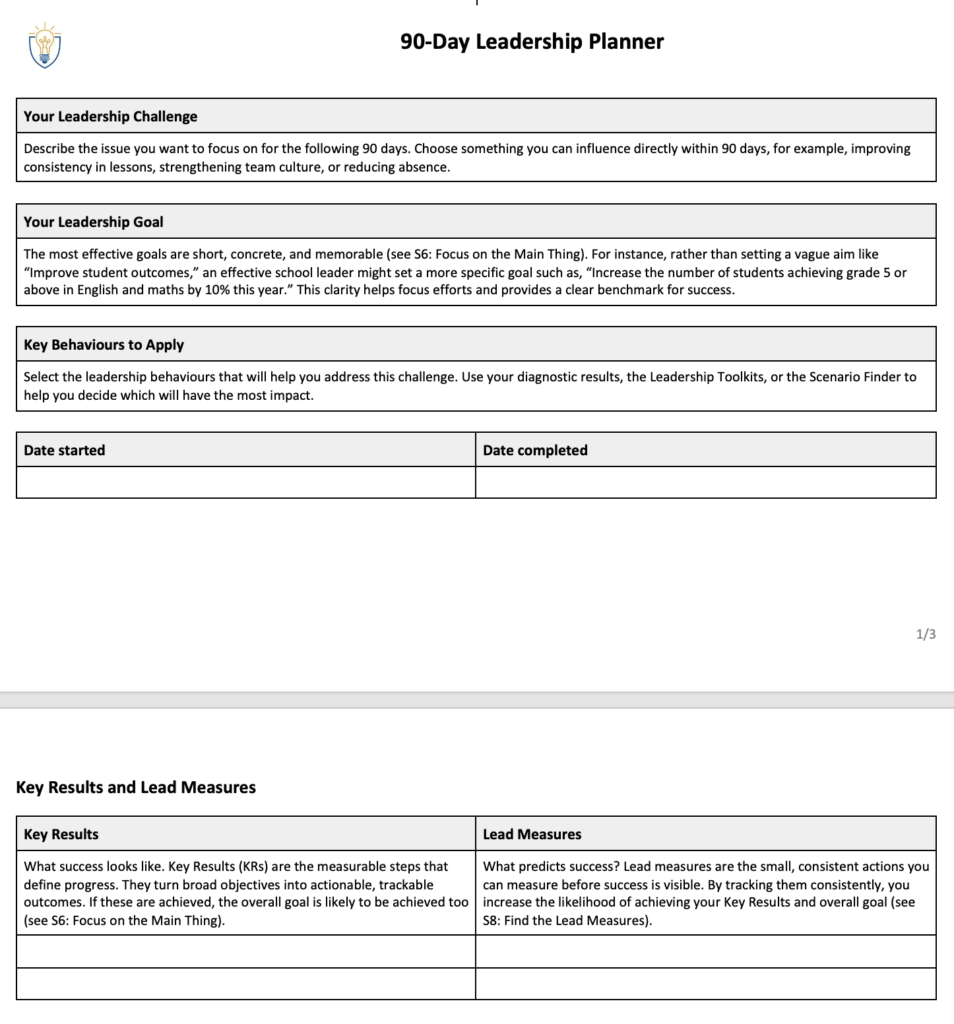
Step 6. Plan: Set measurable goals using the 90 Day Leadership Planner.
Turn improvement into action by tracking your focus and progress over time, with completed examples for different career stages.
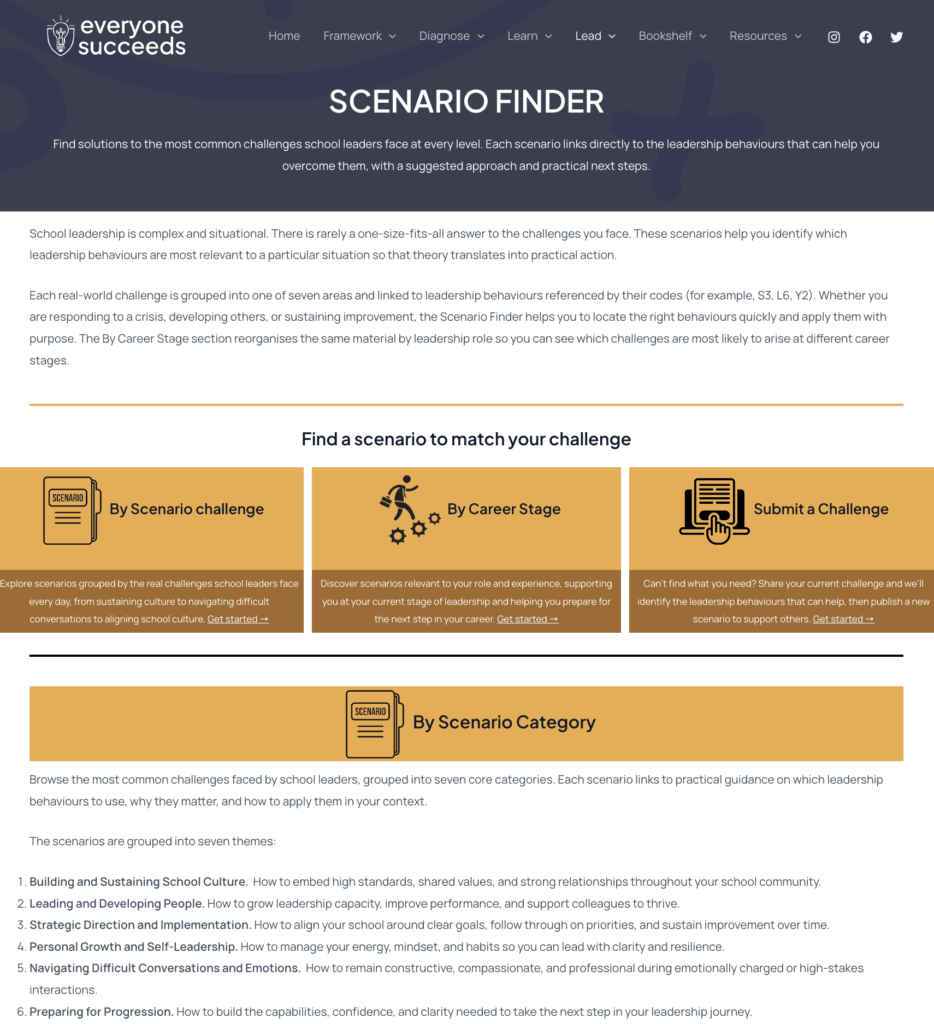
Step 7. Lead: Apply your learning to real situations through the Scenario Finder.
Over fifty scenarios link directly to the behaviours that help you solve the challenges that matter most in your school.
One book suggestion
Thinking in Systems – Donella Meadows (2008).
This book helps you practise the behaviour by revealing how decisions ripple through a system, equipping you to predict impact and act with foresight. Buy the book.
References from the Everyone Succeeds book
Senge, P.M. (1990). The Fifth Discipline. The Crown Publishing Group.
Simon, Herbert A., (1957). Models of Man, New York: John Wiley.
Thaler, R.H. and Sunstein, C.R. (2008). Nudge: Improving Decisions about health, wealth, and Happiness. New York: Penguin Books.