

Everyone Succeeds
54 behaviours to transform your school
Great school leadership is often talked about, but rarely defined. Leaders are told to be strategic, inspiring, visible, or calm under pressure, yet very little time is spent explaining what those things actually look like in practice.
Everyone Succeeds exists to solve that problem.
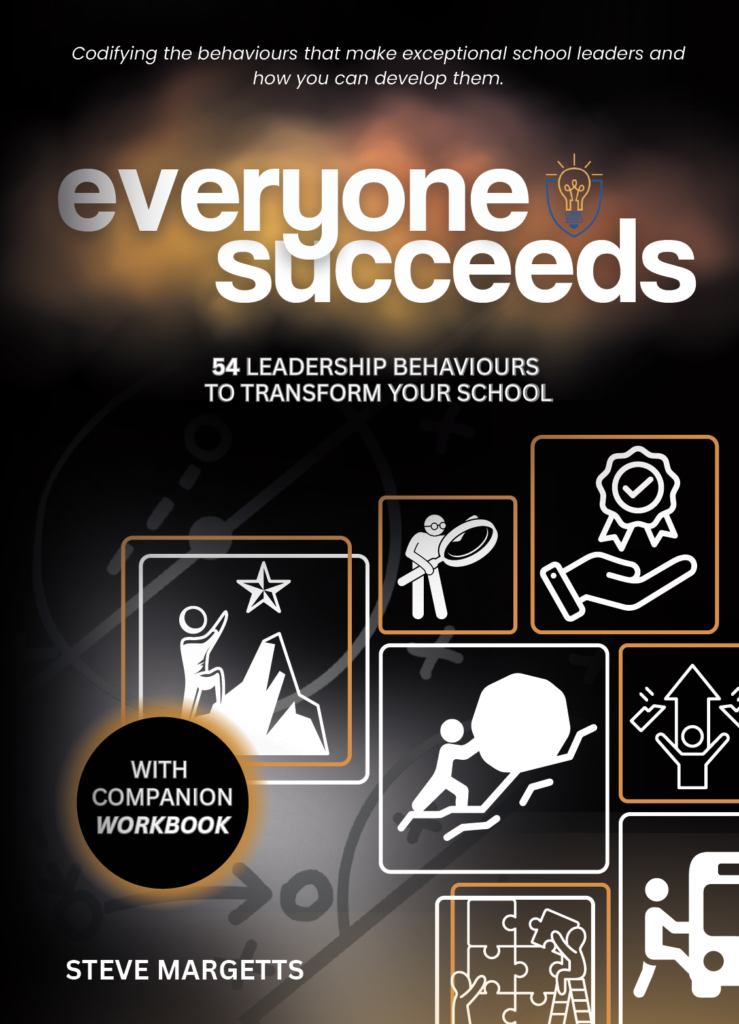
This book codifies 54 specific leadership behaviours that define exceptional school leadership in action. Drawing on close observation of highly effective leaders, academic research, and real school practice, it offers a clear, shared language for understanding what great leadership actually looks like, day to day, in real schools.
Rather than focusing on personality, style, or abstract theory, the book focuses relentlessly on behaviour. The things leaders do, say, prioritise, and repeat. The actions that shape culture, influence teams, and ultimately improve outcomes for pupils.
What the book gives you
For each of the 54 behaviours, the book helps you to:
• Understand why the behaviour matters and what problem it solves
• See what effective leadership looks like in practice, not just in theory
• Recognise common misconceptions and ineffective versions of the behaviour
• Apply the behaviour consistently within your own role and context
• Build a shared leadership language across your school or trust
The behaviours are organised into five practical domains: Strategy, Culture, Leadership, Teams, and Yourself. This gives you a clear picture of what effective leaders actually do from day to day, and how those actions connect to stronger schools and better outcomes for students.
Who the book is for
Everyone Succeeds is written for leaders at every stage of their journey, including:
• Aspiring and new middle leaders
• Heads of department and pastoral leaders
• Senior leaders and assistant principals
• Headteachers and executive leaders
It supports individual reflection and growth, while also providing a framework that leadership teams can use together to align expectations, improve consistency, and develop others with clarity and confidence.
Part of a wider leadership framework
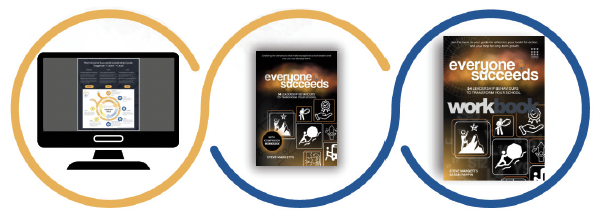
The book sits at the heart of the Everyone Succeeds leadership cycle, supporting the learning stage by building deep understanding of the behaviours that underpin effective leadership.
Alongside the workbook and online tools, this book forms a simple, practical cycle for leadership growth: Diagnose, Learn, Lead.
About Steve Margetts
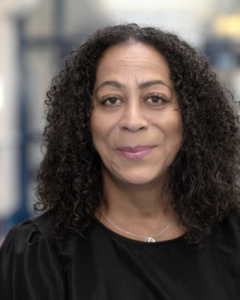
I have been the Principal of Torquay Academy since January 2014. Over that time, I have been privileged to work alongside exceptional leaders, teachers, and support staff who have helped to transform the school into one the local community is proud of, while significantly improving outcomes for the children we serve.
That, however, is not how my headship began.
I took up my first headship in January, and by the end of the summer term, the school had narrowly avoided being placed into special measures following an Ofsted inspection. That summer, GCSE outcomes fell to an all-time low, with just 28% of students achieving a pass in English and Maths. Several year groups were less than half full, confidence was fragile, and the margin for error felt vanishingly small.
Eight months into my first headship, there were moments when I questioned both my decision to take the job and my own ability to lead meaningful change. I retained a strong belief that improvement was possible and that failure was not inevitable, but leadership in those circumstances was demanding. In those moments, it was not always clear what effective leadership behaviour actually looked like day to day.
That uncertainty came to a head during a visit from Sir David Carter, then Regional Schools Commissioner for the South West. I approached the visit with real apprehension, expecting scrutiny and confirmation of the doubts I was already carrying. Instead, I experienced something very different. Through his ability to instil belief, he helped me see possibilities where I had only seen limitations.
Following the visit, David sent me a handwritten note. It reinforced the confidence he had placed in me and the belief he had encouraged me to hold in myself. I keep that note on my desk to this day, not just because of who wrote it, but because of what it represents. A reminder of the power leaders have to shape how others see themselves at moments when confidence is at its lowest.
My interest in leadership had begun earlier in my career. I completed a Postgraduate Diploma in School Leadership before taking on my first leadership role and later returned to academic study to complete an MBA in 2023. Alongside this, I have visited schools across the UK and the USA, learning from leaders working at every level and in every context.
A significant influence on my thinking was Doug Lemov. Meeting Doug and working with him on teaching and learning on several occasions challenged how I thought about professional practice and improvement. His work on codifying great teaching prompted a question that stayed with me. If effective teaching behaviours could be identified, named, and practised, why not leadership?
This book is the result of that question. It draws on years of observation, practice, reflection, and learning to identify the behaviours that highly effective school leaders consistently demonstrate. It is written for leaders who know that leadership is demanding, often isolating, and sometimes overwhelming, but who believe that improvement is possible when behaviour is made deliberate, visible, and practised with intent.