

S6. Focus on the main thing
Prioritise what will make the greatest difference. Effective leaders protect focus by saying no to distractions.

Resources to support growth in this behaviour
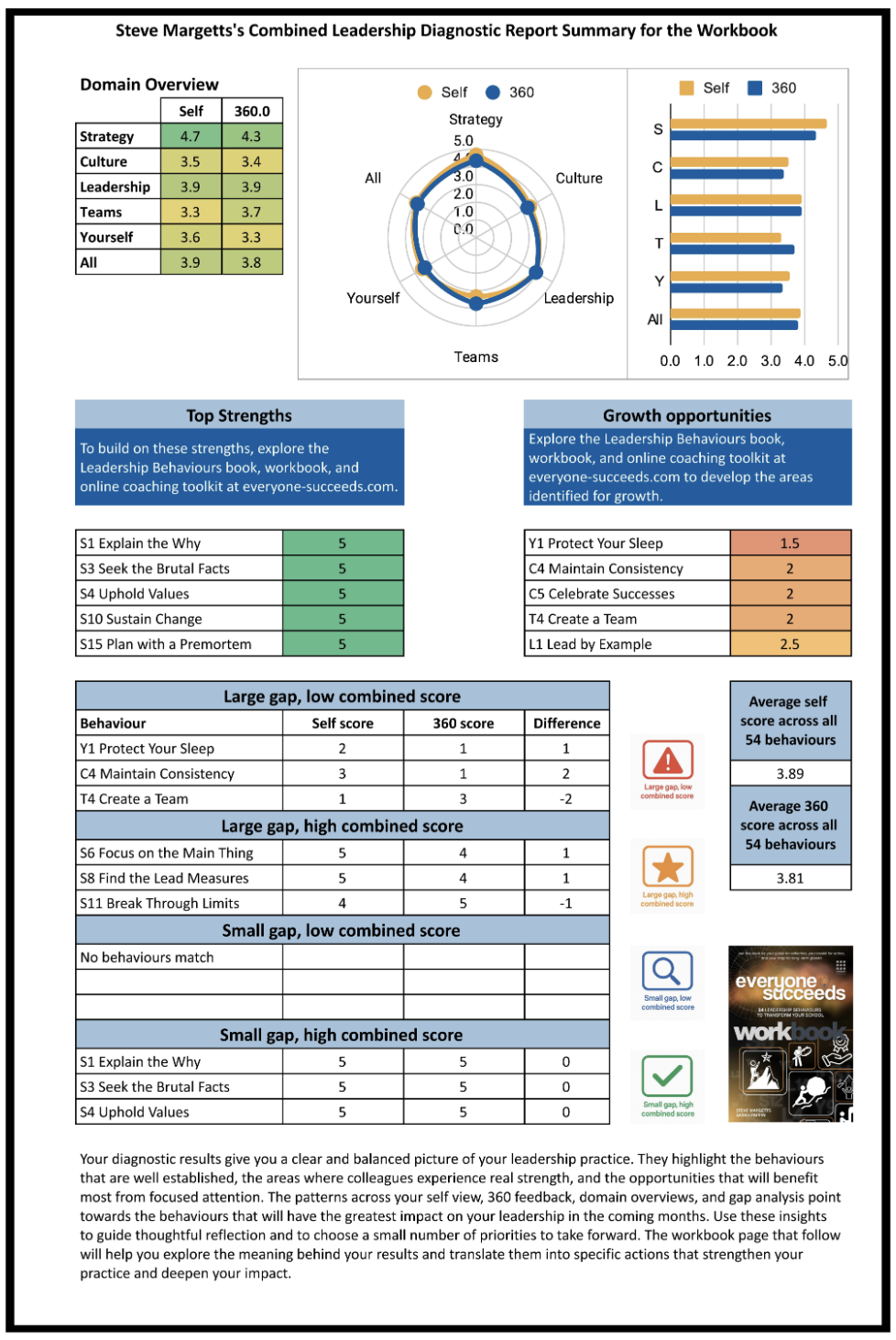
Whether this behaviour has been chosen through Step 1. Diagnose, highlighted through reflection or coaching, or identified as a school or trust priority, you can now follow the steps below to develop and embed it in your daily leadership practice.
Step 2. Learn: Read Everyone Succeeds: 54 Leadership Behaviours to Transform Your School to understand what great leadership looks like in practice. Each behaviour is grounded in research and real examples from schools and businesses.
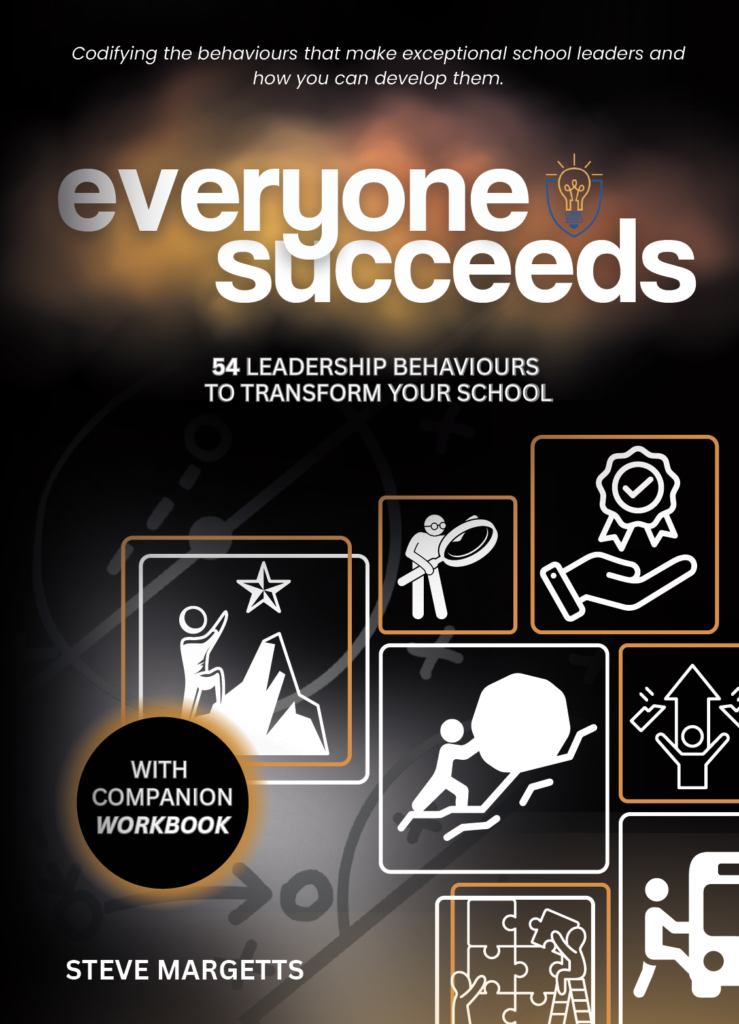

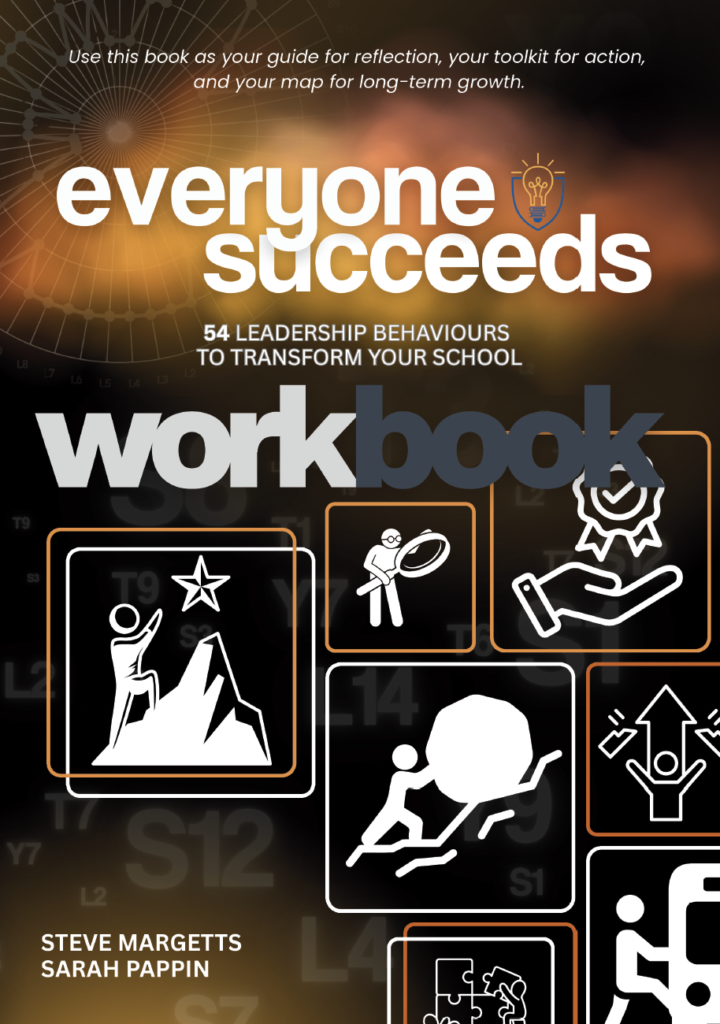
Step 3. Reflect: Use the Everyone Succeeds Workbook to apply ideas to your own context.
Guided reflection, practical actions, and space for planning turn understanding into improvement.

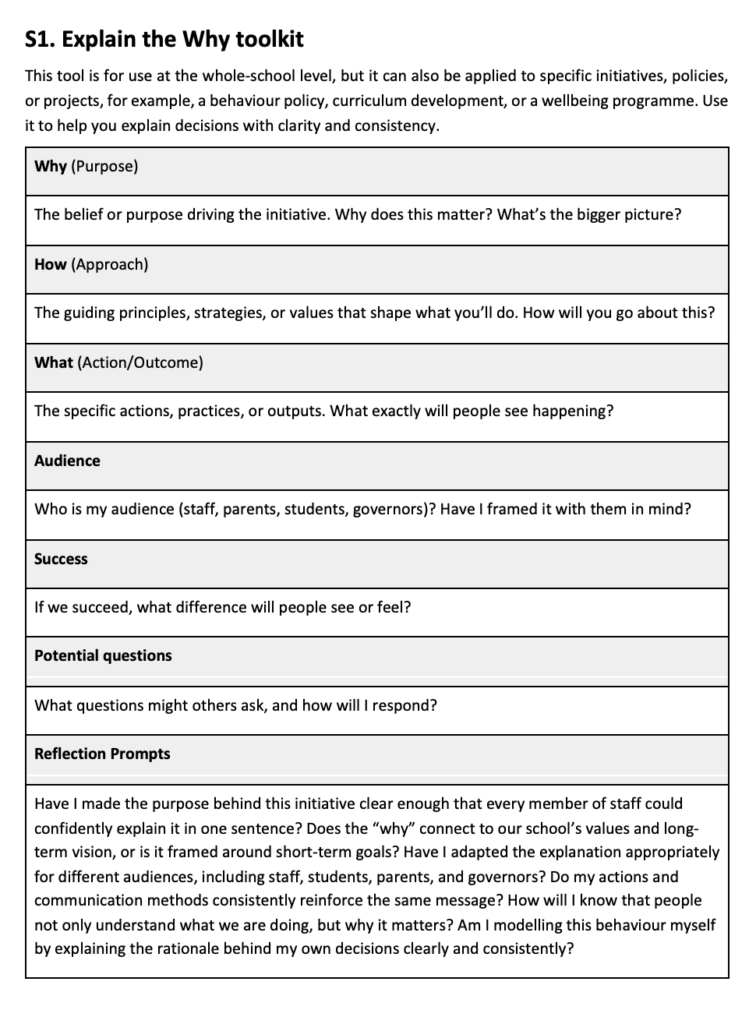
Step 4. Apply: Work through the Leadership Toolkit for this behaviour. Use the Focus on the Main Thing toolkit to identify your priority goal, define supporting objectives, and organise key results so focus is sustained across the year.
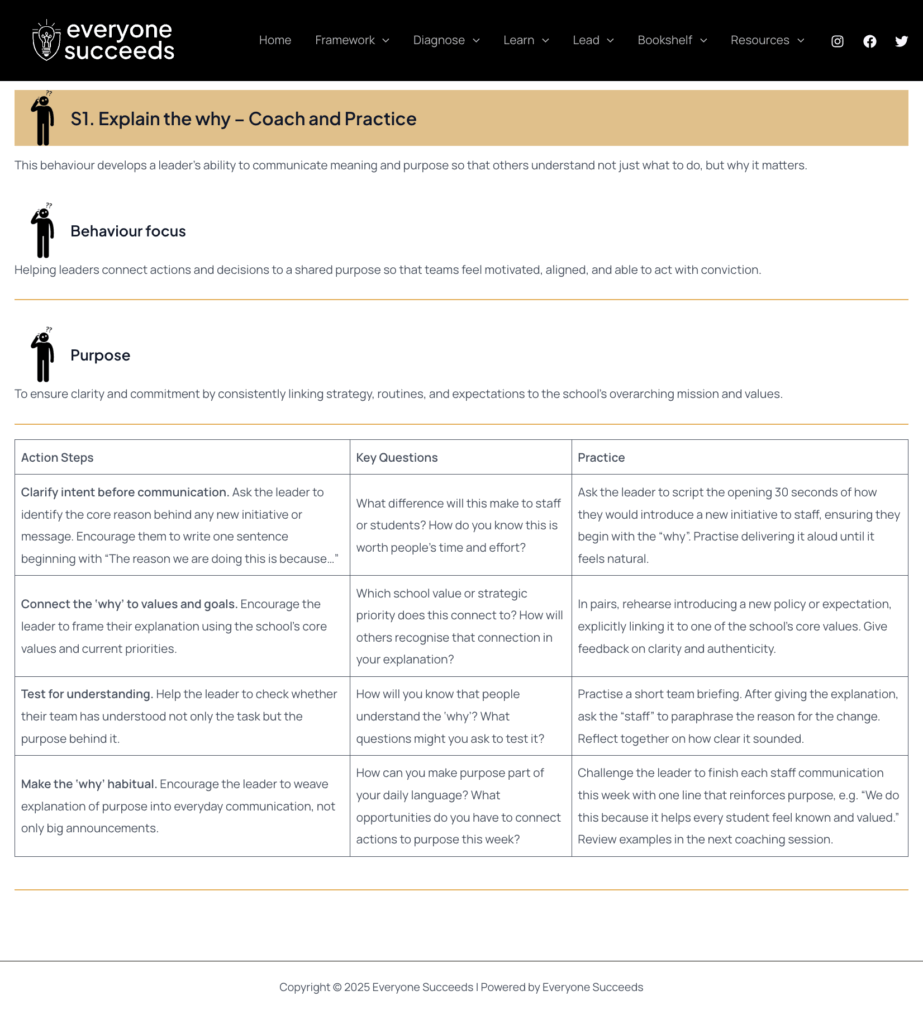
Step 5. Coach and practice: Use the Focus on the main thing Coach and Practise Frameworks to strengthen the behaviour through prioritisation actions and coaching questions about trade-offs and attention, practising saying no, protecting focus, and reinforcing what matters most until clarity becomes routine.
These can be used individually or with colleagues to embed key behaviours.
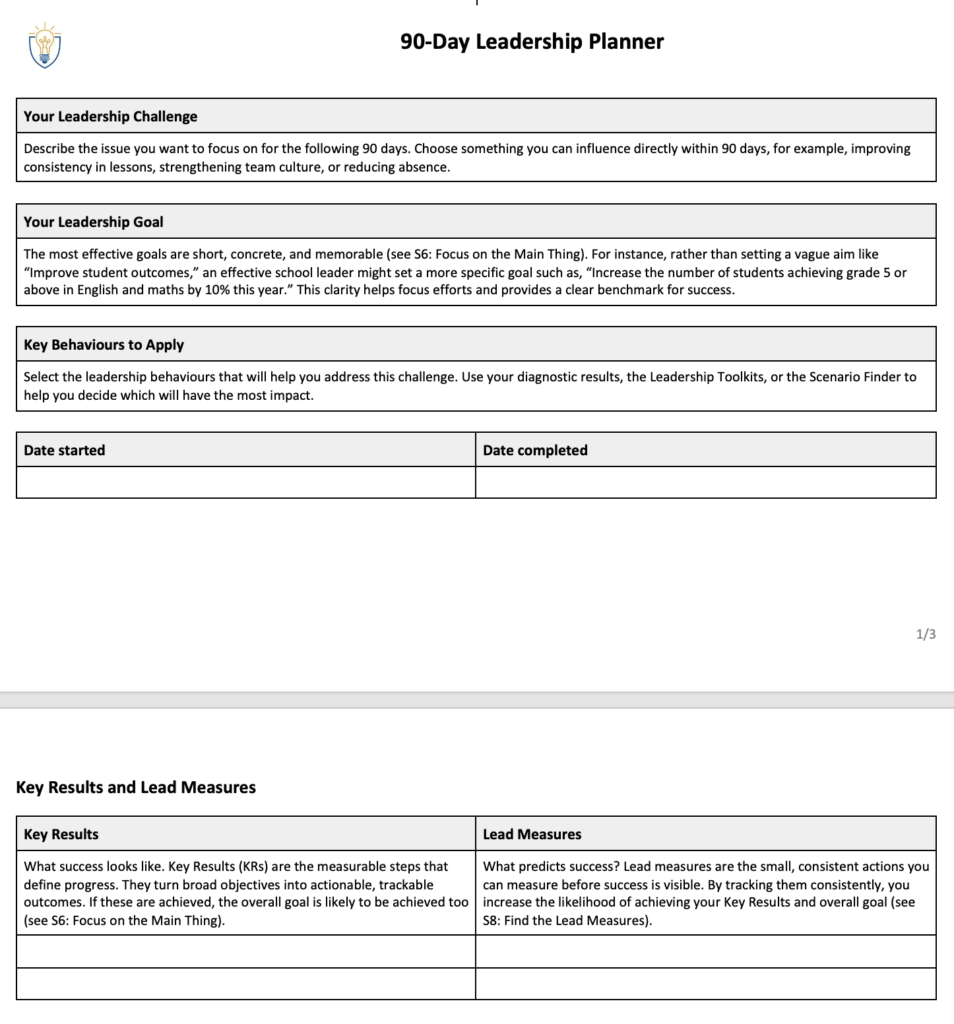
Step 6. Plan: Set measurable goals using the 90 Day Leadership Planner.
Turn improvement into action by tracking your focus and progress over time, with completed examples for different career stages.
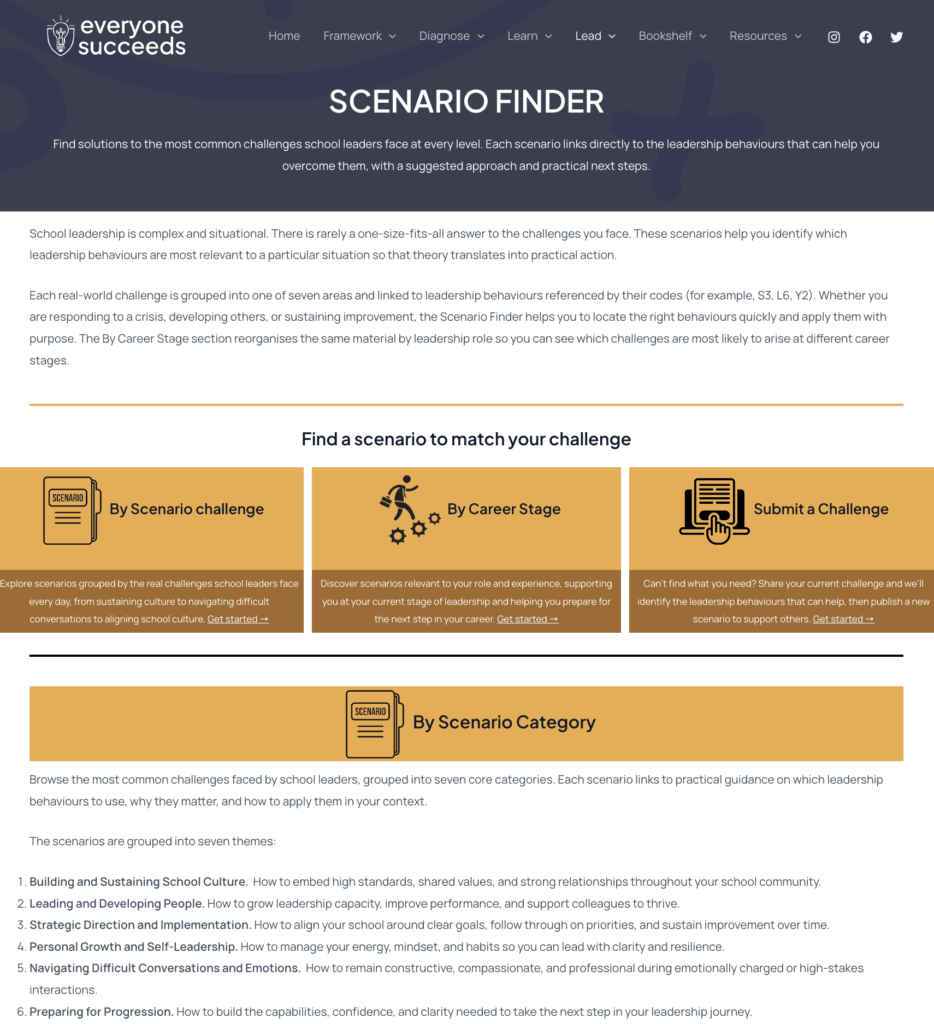
Step 7. Lead: Apply your learning to real situations through the Scenario Finder.
Over fifty scenarios link directly to the behaviours that help you solve the challenges that matter most in your school.
One book suggestion
Good to Great – Jim Collins (2001).
This text deepens your understanding by exploring how clarity of purpose enables organisations to prioritise what matters most and ignore distractions. Buy the book.
References from the Everyone Succeeds book
Covey, S. R. (1989). The 7 Habits of Highly Effective People: Powerful Lessons in Personal Change. New York: Free Press.
Doerr, J., (2018). Measure what matters: How Google, Bono, and the Gates Foundation rock the world with OKRs. Penguin.
Lencioni, P.M., (2012). The advantage: Why organisational health trumps everything else in business. John Wiley & Sons.
Pounds, W. F. (1965). The Process of Problem Finding. Sloan School of Management Working Paper No. 145-65. Massachusetts Institute of Technology.
