

Strategy behaviour S2
Tell the Story
A vision only moves people through a story. Share why you care, what your community has achieved together and why action matters now.
Jump to S2 resources ↓What this behaviour looks like
Self, us and now
A leader shares a personal reason for caring, a story of what pupils, staff and families have achieved together, and why the moment to act is now. Real examples and evidence make it credible, and it ends with one clear ask.
A practical example
Launching a reading priority
Data and directives“Reading results are below target. From next week every class will do daily fluency practice.”
Telling the story“I care about reading because a teacher once helped me love books. Last year our Year 3 team showed what daily reading can do: reluctant readers began choosing books. Too many children still miss out, so this week let's each start daily fluency practice.”
A teacher once helped the leader love books.
Year 3's daily reading turned reluctant readers into book choosers.
Too many still miss out, so start daily fluency practice.
Write three sentences for a change you are leading: why you care, what the team has already achieved together, and the one action you are asking for now.
S2 · Resources for your setting
Put ‘Tell the Story’ into practice
Develop your own practice or lead the learning with your team. Use the chapter and workbook to explore the behaviour, then choose the resources that fit your next step.


Apply · Your leadership practice
Put it to work
Use the S2 Playbook to turn the behaviour into practical action on a real leadership challenge.
- Practical toolkit and coaching prompts
- A practice script to rehearse your approach
- A 90-day plan to guide your next steps
Members only · Explore membership →

Apply · Learning with your team
Lead a team session
Use the S2 INSET PowerPoint to help colleagues explore the behaviour and plan how to put it into practice.
- Editable slides to adapt to your setting
- Speaker notes to support facilitation
- Discussion, rehearsal and planning
Members only · Explore membership →
Completed Playbooks
See S2 applied in eight leadership contexts
Choose your role to explore the challenge, the leader’s response and the intended result. Members can read the complete example and download an editable Word copy.
In a primary school
In a secondary school
Across schools
Selected completed example
In a primary school · Headteacher
Rebuilding family trust on attendance
Nicola · Headteacher · 405-pupil primary school with specialist SEND provision
Worked example at a glance
Rebuilding family trust on attendance
The challengeFormal attendance letters have gone to 31 families without a listening conversation first. One parent felt judged by a letter, until a later conversation uncovered transport and arrival barriers.
What the leader doesWith the parent's consent, the headteacher tells the story anonymously, owns the school's first response and asks staff to record one family priority and one school action in every conversation, which families can correct.
What success looks likeBy day 30 the first ten families should have a listening conversation and shared plan; by day 60 at least 90% of promised school actions should be done on time; by day 90 attendance and family confidence should improve.
Lydia · Deputy Headteacher for standards · 405-pupil primary school with specialist SEND provision
Worked example at a glance
Renewing the reading culture
The challengeReading attainment is rising, but 28% of targeted readers describe reading mainly through intervention or difficulty. One pupil called it the lesson they get taken out of.
What the leader doesThe deputy headteacher credits what staff already do well, removes two duplicate reading logs and asks each phase to remove one access barrier, extend one proven practice and gather one consent-safe pupil account.
What success looks likeBy day 30 every phase should name one barrier and one changed pupil experience; by day 60 target pupils should access and discuss common texts more successfully; by day 90 reading outcomes and identity should improve without extra workload.
Lina · Science Lead and Year 2 teacher · 405-pupil primary school with specialist SEND provision
Worked example at a glance
Making scientific curiosity visible
The challengeDisplays and newsletters celebrate Science Week and outcomes, but only 7 of 42 sampled examples include a pupil question, and pupils using alternative communication are missing altogether.
What the leader doesThe Science lead admits nearly passing over a pupil's question about playground shadows, then asks each phase for one pupil question, one changed idea and one accessible representation to plan the next teaching move.
What success looks likeBy day 30 every phase should contribute one authentic curiosity sequence; by day 60 underrepresented pupils should appear fairly in the shared story; by day 90 pupils should increasingly describe Science as something they can do.
Vanessa · Headteacher · ages 11 to 18 school, 1,285 pupils
Worked example at a glance
The next chapter after inspection
The challengeAfter a difficult inspection, a run of urgent leadership messages made staff effort feel invisible and left teams facing nine disconnected workstreams.
What the leader doesThe headteacher owns the communication mistake, names two cross-team pilots worth building on, replaces nine workstreams with two priorities and a published stop list, and asks each team for one first action.
What success looks likeBy day 30 staff should name the two priorities, the stop list and leadership commitments; by day 60 teams should make one supported practice change with pupil evidence; by day 90 variation should narrow without renewed initiative overload.
Melissa · Deputy Headteacher for evaluation · ages 11 to 18 school, 1,285 pupils
Worked example at a glance
An honest inclusion story
The challengeSuspensions fell from 214 to 132, but internal removal and repeated lesson exits remain uneven by pupil group, and one positive headline could close down scrutiny.
What the leader doesThe deputy headteacher credits the collective work behind the fall, shares one consented pupil account and asks each faculty-pastoral pair to trace a pupil's experience, test a pattern and make one preventive change.
What success looks likeBy day 30 all leaders should explain both the progress and the unfinished inequity; by day 60 every faculty-pastoral pair should complete one case-to-pattern review; by day 90 lost learning and unequal repeat removal should reduce.
Tessa · Safeguarding and Student Voice Lead · ages 11 to 18 school, 1,285 pupils
Worked example at a glance
Rewriting a year group's label
The challengeYear 9 have been called 'the disrupted year' so often that pupils say failure feels expected, and 63% say school messages focus on what they lost.
What the leader doesThe pastoral lead owns the label, shares a pupil-designed start routine that improved readiness, and asks each tutor group to choose one two-week learning habit alongside one named adult support action.
What success looks likeBy day 30 every tutor group should agree one pupil habit and one adult support action; by day 60 adult commitments and reviews should be completed reliably; by day 90 readiness and participation should improve, especially for the least-reached pupils.
Leonie · Head of Music · ages 11 to 18 school, 1,285 pupils
Worked example at a glance
Recognising the whole production
The challengeConcert thanks name soloists repeatedly, while fewer than one in five backstage or ensemble contributors appear in success stories. A sound-team pupil asked whether technical work counted.
What the leader doesThe head of Music owns the narrow thanks, credits the pupil-led sound group and asks every production strand to name its artistic contribution and create one supported route in for a new participant.
What success looks likeBy day 30 every production strand should name its contribution and entry route; by day 60 new participants should complete meaningful coached work; by day 90 recognition and progression should broaden without lowering artistic standards.
Louisa · Trust Director of Strategy and Engagement · five-school trust
Worked example at a glance
A trust story that credits every school
The challengeA pupil said trust communications make every school sound the same. Headteachers are waiting to hear whether the trust story honours their school's identity or borrows it.
What the leader doesThe director asks each school for one consent-safe local example, one unresolved tension and one next action, then publishes the first draft for correction rather than presenting a finished central account.
What success looks likeBy day 30 all five schools should approve a locally authored story; by day 60 the narrative should shape one funding and one central decision; by day 90 at least 75% of sampled staff should recognise their school and the shared purpose.
The complete Playbook is for members
Turn this example into action
Read the full toolkit, coaching and practice scripts, and 90-day plan. Members can view the PDF here and download an editable Word copy.
Resources for this behaviour
Templates and checklists from the resource library that put S2 into practice.
Further reading
Recommended reading
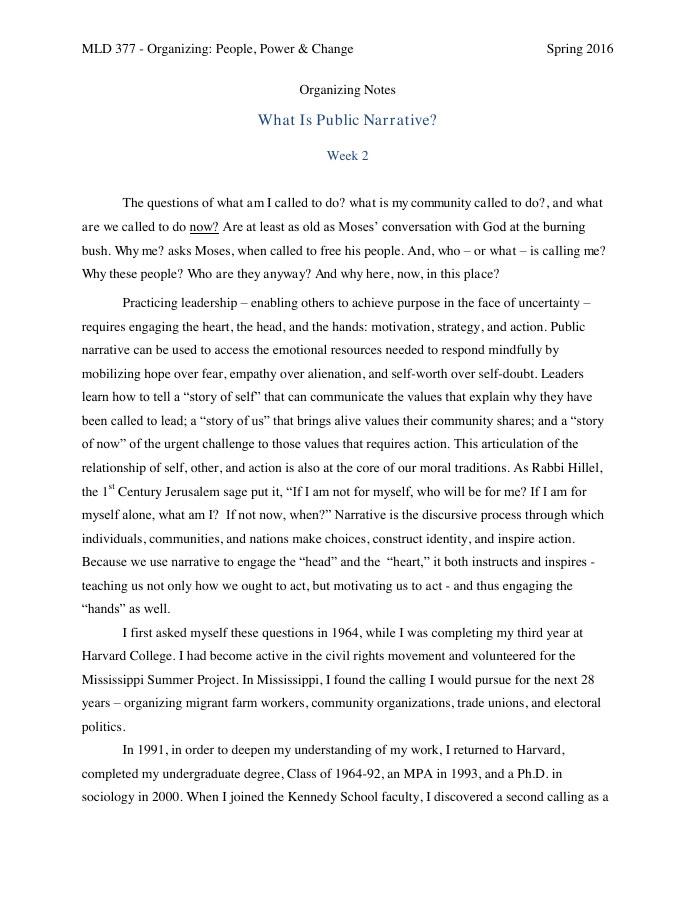
What Is Public Narrative? – Marshall Ganz (2016)
This text deepens your understanding of the behaviour by illustrating how structured storytelling motivates collective action, helping you frame narratives that move people towards a shared purpose.
References from the Everyone Succeeds book
- Brown, B. (2015) Daring Greatly: How the Courage to Be Vulnerable Transforms the Way We Live, Love, Parent, and Lead. London: Penguin Life. Buy on Amazon ↗
- Ganz, M. (2011) 'Public narrative, collective action, and power', in Odugbemi, S. and Lee, T. (eds) Accountability Through Public Opinion: From Inertia to Public Action. Washington, DC: The World Bank, pp. 273–289. Read free ↗
Not sure where to start? Take the free leadership diagnostic to find your three priorities.
As an Amazon Associate, Everyone Succeeds earns from qualifying purchases.